REVIEW · MADRID
Madrid: Tapas, Taverns & History Tour
Book on GetYourGuide →Operated by Devour Tours · Bookable on GetYourGuide
Madrid at night has a rhythm, and tapas lead the way. This 3.5-hour tour mixes Spanish food culture with a guided stroll through landmarks you actually recognize, from Royal Palace photo stops to Plaza Mayor and Puerta del Sol. It’s a fun way to learn how going out works here, not just what to eat.
I like that you get real hands-on practice with Spain’s aperitivo habit first (vermouth), then you keep sampling as the history walk fills in what you’re seeing. I also like the variety: a family-run spot serving Asturias cider and classic Madrid bites like garlic shrimp at a bar that’s been open since 1906. One thing to consider: it’s a walking tour with a moderate pace and it’s not suitable for vegans or guests with celiac disease, and dietary needs can’t always be swapped at every stop.
In This Review
- Key highlights you should clock before you go
- Why this Madrid tapas and history tour feels different from a typical food crawl
- Where you’ll start: Plaza Mayor area vs Casa Labra
- First stop: vermouth and your tapeo crash course at a historic tavern
- El Escarpín and Asturias cider: tasting with your hands, not just your fork
- The Royal Palace photo stop and the Habsburg neighborhood walk you’ll remember
- Mesón del Champiñón and Plaza Mayor: classic Madrid flavors plus square-level context
- Puerta del Sol: the quick pass that still adds meaning
- La Casa del Abuelo: classic tapas, including gambas al ajillo at a long-running bar
- La Latina Express option: trendy wine spots in a focused neighborhood loop
- Pace, groups, and what to expect from the walking portion
- Drinks and dietary needs: what’s supported, and what isn’t
- Price and value: is $89 worth it for this mix of food, drinks, and city context?
- Who this tour fits best in your trip
- Should you book this Madrid Tapas, Taverns & History Tour?
- FAQ
- How long is the Madrid Tapas, Taverns & History Tour?
- How many tapas and drinks are included?
- What language is the tour guide?
- Where does the tour start?
- Is transportation included?
- Is this tour suitable for vegans or guests with celiac disease?
- Can the tour accommodate dietary restrictions like vegetarian or gluten free (not celiac)?
Key highlights you should clock before you go
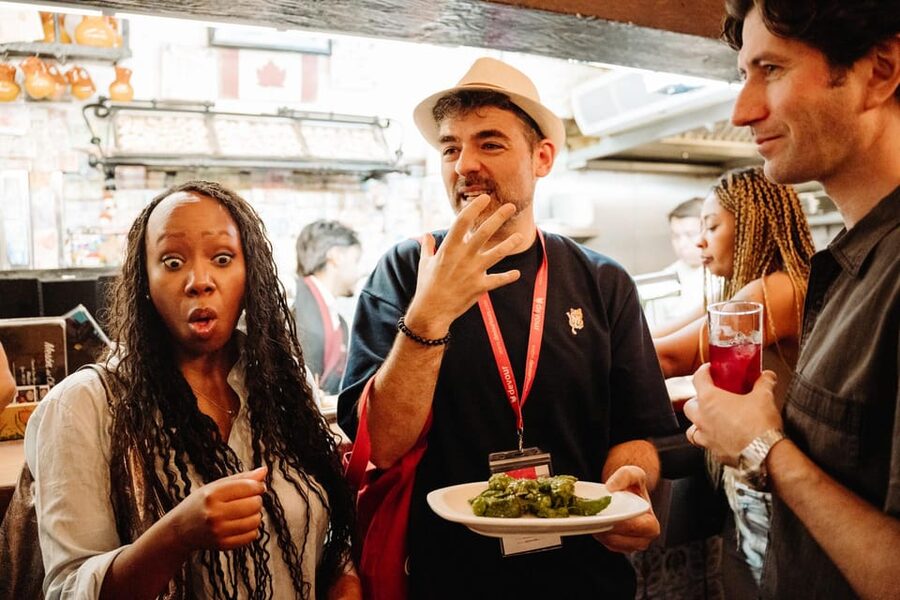
- 9+ tapas and 4 drinks across four tasting stops, so you’re not just nibbling
- Vermouth first, with a quick crash course in tapeo (how locals actually do tapas)
- Asturias cider poured traditionally, including a chance to try it your way
- Historic landmarks on foot: Royal Palace, Plaza Mayor, and Puerta del Sol with context
- Optional La Latina Express for a trendy wine-focused 4-stop night in La Latina
- Guides who keep it lively, with names like Flo, Arantxa, Eleanor, Asier, and David B often praised for mixing food talk with real stories
Why this Madrid tapas and history tour feels different from a typical food crawl
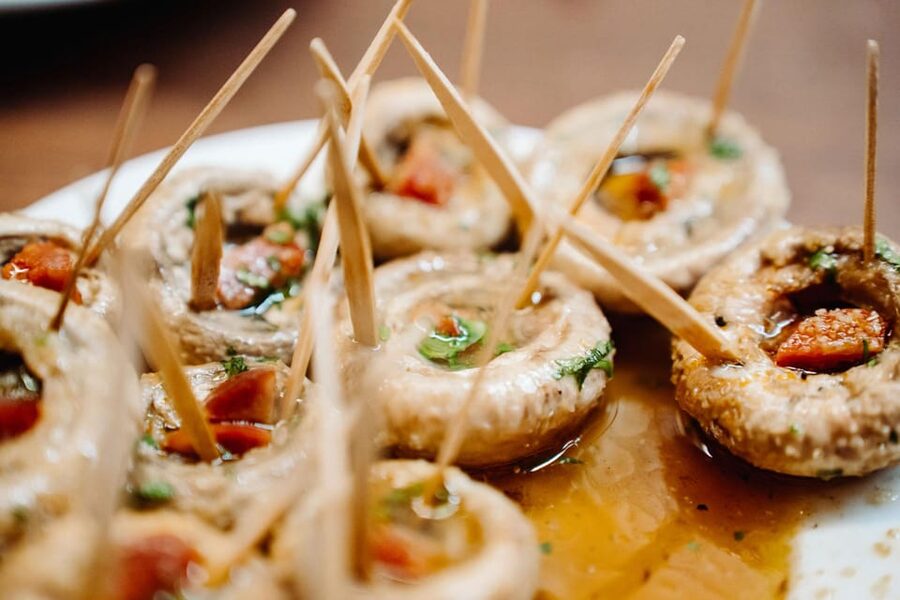
Madrid tapas tours often fall into one of two buckets: eat, or learn. This one tries to do both, and the best part is how naturally the two connect. Tapas aren’t just snacks here; they’re how people socialize, plan their evening, and talk history without needing a textbook.
You also get structure, which matters on a short night. Four tasting stops are enough to feel full but not so many that you’re wobbling through the Royal Palace area. The walking component keeps you oriented in the center, so the next day you can go back and explore with confidence.
You can also read our reviews of more tours and experiences in Madrid.



Where you’ll start: Plaza Mayor area vs Casa Labra
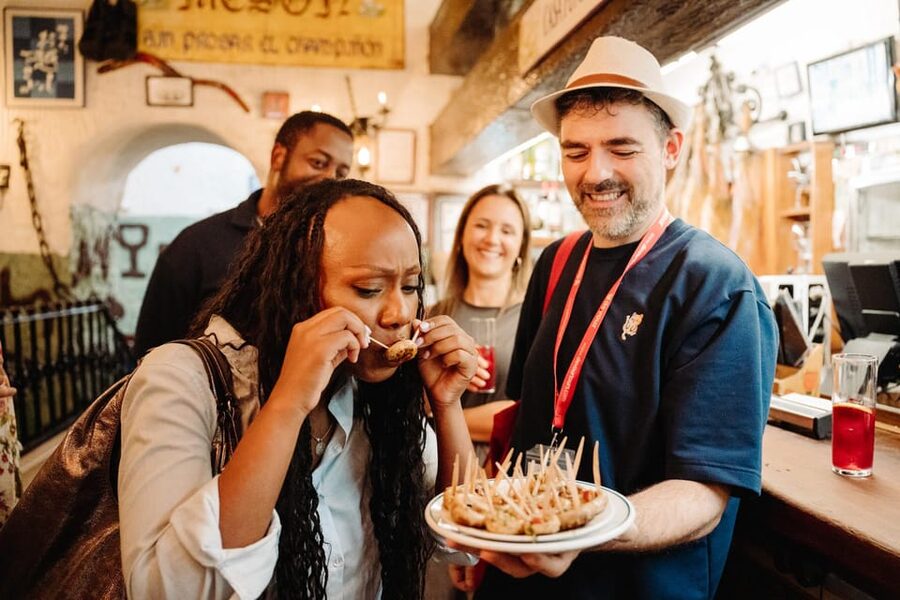
You’ll start at one of two points in the center, depending on your option. One common meeting spot is near the Plaza Mayor area at Pl. Mayor 27, and another is at Casa Labra.
That choice is small on paper but big in practice. Starting near Plaza Mayor puts you close to the grand squares you’ll later pass with your guide, which can make the first part feel immediately connected. Casa Labra is also a classic launchpad for anyone who wants a more traditional, central Madrid vibe right from step one.
If you’re aiming to do a “first night in Madrid” move, I’d lean toward whichever starting point is closest to your lodging. You don’t want stress before your first vermouth.
First stop: vermouth and your tapeo crash course at a historic tavern
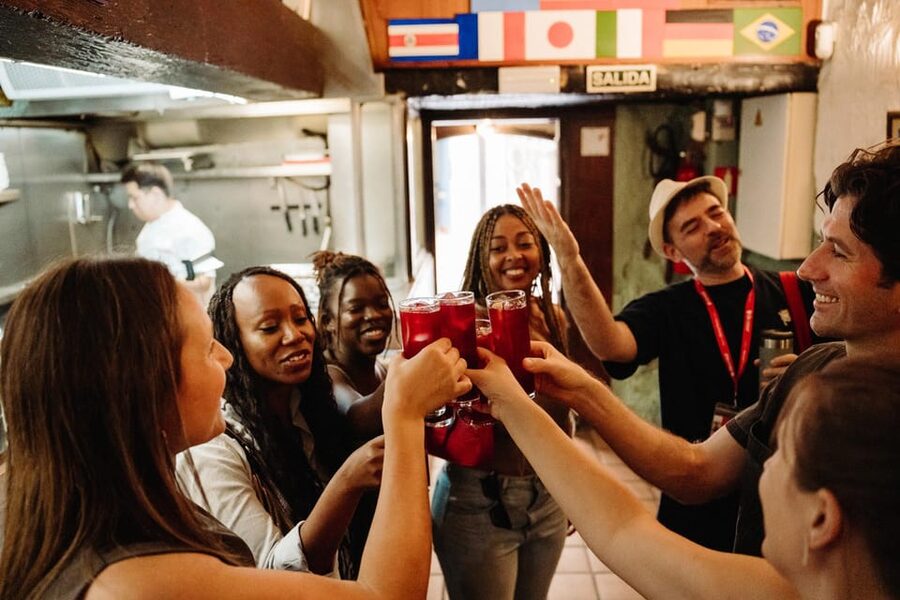
Your evening begins in a historic tavern, and the pacing is smart. You start with your first tapas plus vermouth, then the guide shows you how to do tapeo like a Madrid regular.
This part matters because it changes how you order everywhere else. In Madrid, you’re not just eating quickly; you’re learning the local rhythm: when to sit, how to pair, and how to keep the night moving without turning it into a meal marathon.
From there, expect a quick but practical vibe check from your guide. People who’ve done the tour describe guides like Flo and Eleanor as especially good at balancing food and city context, so you’re not only tasting but also picking up useful “how the locals think” nuggets.
El Escarpín and Asturias cider: tasting with your hands, not just your fork

Next up is a stop at El Escarpín, where you’ll try spirits and regional food plus tapas. This is the part of the tour that feels the most ritual-like.
You’ll learn about Asturias cider, including how it’s traditionally poured, and you may even get a chance to try it yourself. That’s more memorable than another plate landing on a table, because you’re participating in the practice, not just eating the result.
If you’re the type who likes stories behind food, this stop will land. And if you’re not, it still works because it’s a sensory experience: the pour, the smell, the taste, then the next small tapas bite.
The Royal Palace photo stop and the Habsburg neighborhood walk you’ll remember
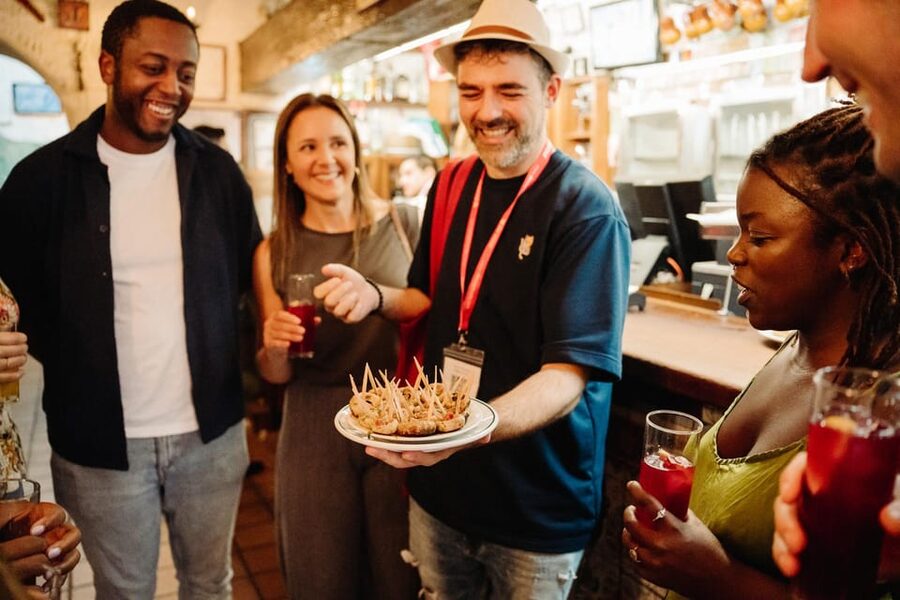
After the second tasting, the tour shifts into “see Madrid through a guide’s eyes.” You’ll have a Royal Palace photo stop, plus a guided walk that passes by key sights and covers what’s going on historically.
You’re also guided through the historic Habsburg neighborhood with buildings dating back to the 15th and 17th centuries. Even if you’ve seen photos of these places before, you’ll understand why they matter once someone links the architecture to how Madrid became Madrid.
This segment is where the tour earns its name. Without it, you’d have a good snack tour. With it, you get a mental map for the city center so landmarks feel less random and more connected.





Mesón del Champiñón and Plaza Mayor: classic Madrid flavors plus square-level context
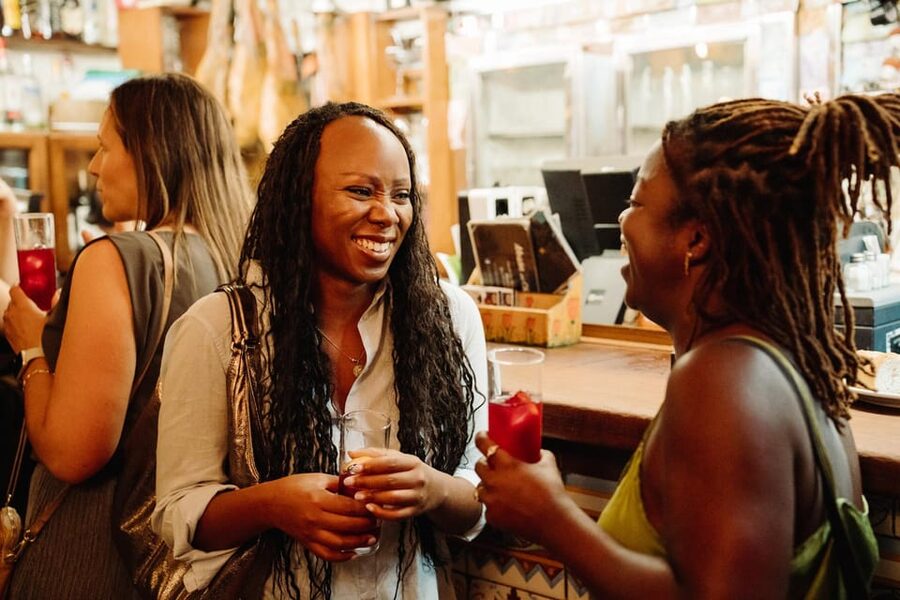
By the time you reach Mesón del Champiñón, you’re ready for more tapas and a wine pairing (wine is part of this stop). The idea here is simple: keep tasting while you move through the most iconic visual landmarks.
Then comes the Plaza Mayor area with photo stops and guided context. You’ll pass through this famous square with your guide explaining why it holds significance in Madrid’s history and culture.
This is a helpful moment, even if you’ve already seen Plaza Mayor from the outside. Your guide’s job is to connect the space to daily life and major historical shifts, so the square becomes more than a postcard.
One practical note: Plaza Mayor can be crowded, so bring patience. This is a short stop in your program, and it helps to keep your pace moving so you don’t get stuck waiting for the group.
Puerta del Sol: the quick pass that still adds meaning
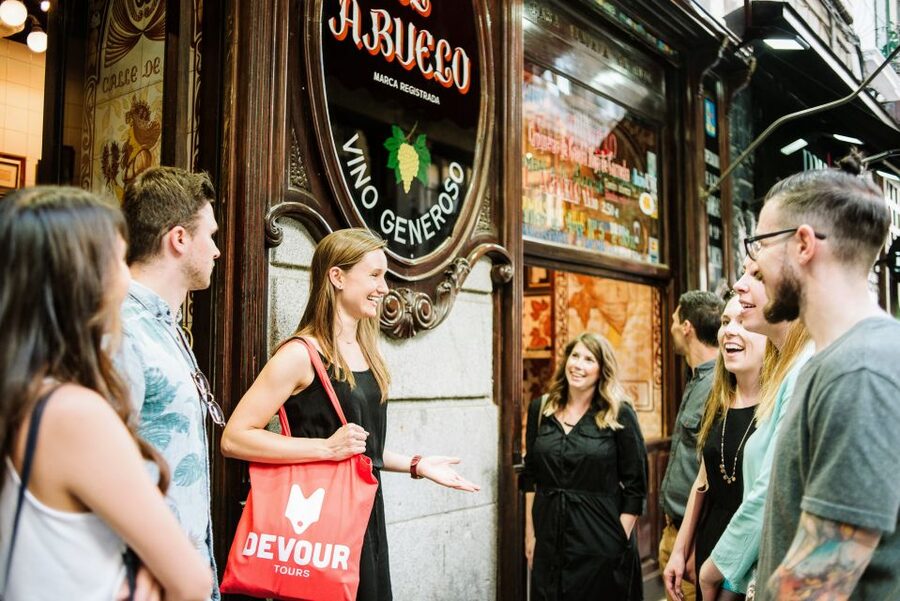
Puerta del Sol is another photo stop with guided passing and sightseeing. It’s brief by design, because your tour is trying to balance tastings and key city orientation in about 3.5 hours.
But you don’t want those two central squares to be “seen once and forgotten.” A guide’s commentary helps you remember which historical role each place played, and why Madrid’s public spaces became the stage for everyday life.
If you’re using this tour to place your bearings for the rest of your trip, this is a good use of time. You’ll walk away knowing where you are, and more importantly, why.
La Casa del Abuelo: classic tapas, including gambas al ajillo at a long-running bar
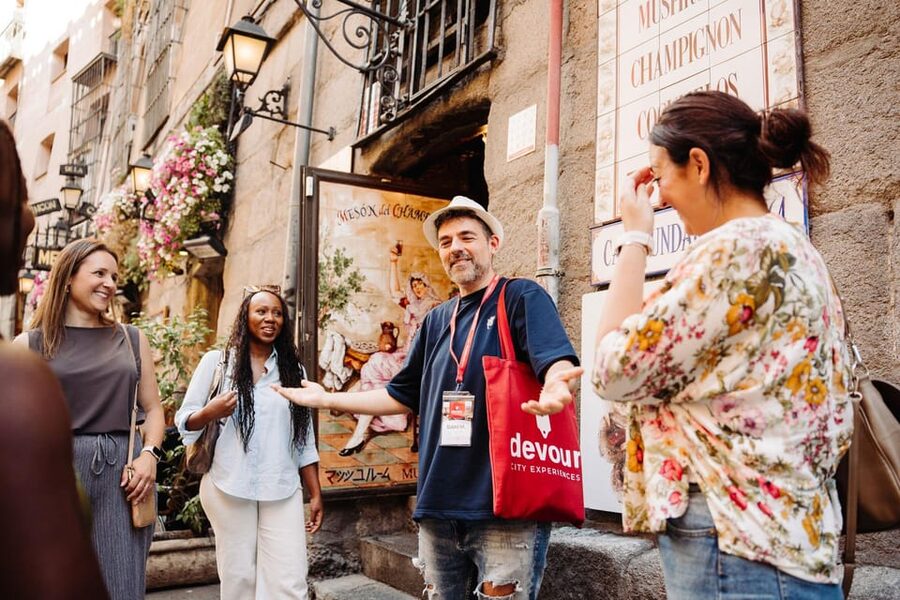
The last stop is at La Casa del Abuelo Núñez de Arce, where the tour ends at C. de la Cruz, 14 in the Centro area. This final tasting is at a family-run bar open since 1906, and the selection is classic Madrid fare.
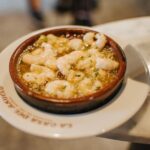
The star you’ll see is gambas al ajillo, garlic shrimp. You’ll even try it at a place that claims it was invented there, which gives the night a satisfying “this is a local legend” ending.
The best way to think about this last stop is momentum. Early in the night, you’re learning tapeo. Later, you’re tasting the classics that show why locals keep coming back. It’s the closing argument for Madrid’s tapas culture.
La Latina Express option: trendy wine spots in a focused neighborhood loop
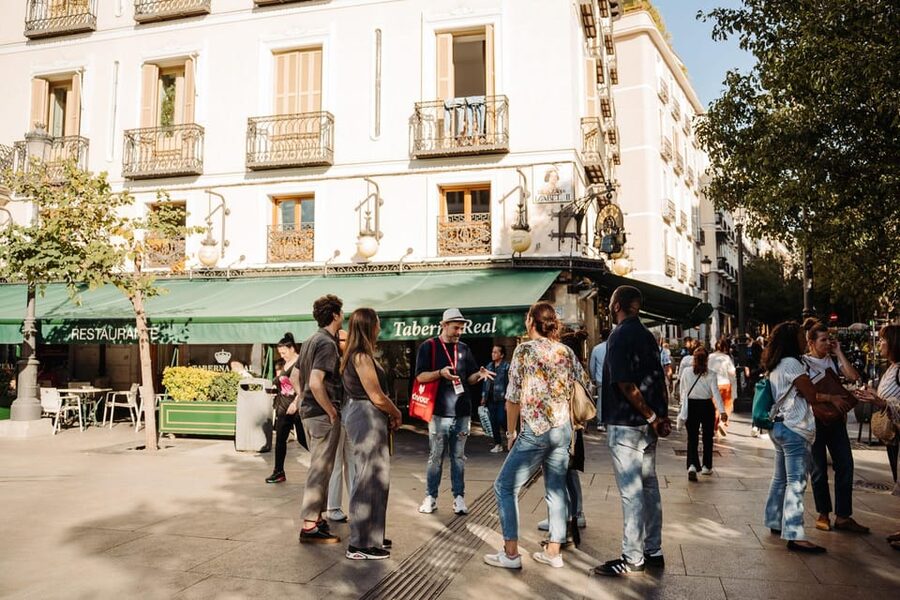
If you choose the Madrid Evening Tapas & Wine Tour option for La Latina Express, the tour shifts toward a lively La Latina route. You’ll get four stops with wine pairings focused on trendier wine spots.
This can be a great pick if you already know you want the wine side of Madrid nightlife more than a “only grand landmarks” vibe. La Latina is also a smart neighborhood base because you’ll finish near areas where it’s easy to keep your night going with local options.
One caution: trendier doesn’t always mean calmer. If you hate noise and crowds, you might prefer the standard route that includes the Royal Palace and major squares.
Pace, groups, and what to expect from the walking portion
This is a walking tour. The program runs about 3.5 hours, with short photo stops and guided passing between tastings. You’ll want comfortable shoes, and it helps to be ready for a moderate pace rather than a leisurely stroll.
Group size can vary depending on the private or small-group option. Some past groups have described a small, convivial set of around seven or eight travelers, which usually keeps the guide’s attention more focused on you.
One potential downside to keep in mind: a few people noted that the early stops can feel a bit rushed. That doesn’t mean the food isn’t good; it means the schedule prioritizes variety and city coverage. If you like to linger, you may want to slow down on your own after the tour ends.
Drinks and dietary needs: what’s supported, and what isn’t
You’ll get 4 drinks across four tasting stops, with vermouth early and wine in later segments. For non-alcoholic options, the tour is adaptable, but it also notes that you may not have a replacement food option at every stop.
Dietary support exists in a “managed but not guaranteed” way:
- Vegetarians are listed as adaptable
- Pescatarians are adaptable
- Gluten-free options exist, but not for celiac disease
- Dairy-free options are adaptable
- Non-alcoholic options can be arranged
What you should know clearly: it’s not suitable for vegans, and it’s not suitable for guests with celiac disease. If that’s you, this is not the right match.
If you have allergies or strong restrictions, contact the provider so ingredients can be arranged. The tour can adapt, but it can’t magically change every kitchen on the spot.
Price and value: is $89 worth it for this mix of food, drinks, and city context?
$89 per person is a fair price for a short, guided night that includes 9+ tapas plus 4 drinks, plus a history walk that passes major landmarks. You’re paying for three things at once:
- Access to multiple established bar/restaurants in a set evening route
- Food and drink variety that you probably wouldn’t assemble on your own quickly
- A guided narrative that turns plazas and buildings into meaningful context
If you’ve ever spent a first night in Madrid bouncing between places without a plan, you know how easy it is to under-eat or order the wrong things. Here, the tasting count is built in, and the guide helps you place each stop into the broader story of Madrid’s food culture.
For me, the strongest value isn’t only the tasting menu. It’s leaving with practical guidance on how to spot authentic spots and how to pace your evening like a local. Several groups have singled out guides for giving strong next-step recommendations after the tour.
Who this tour fits best in your trip
I’d book this if:
- You want a strong first-night orientation in Madrid’s center
- You enjoy tapas and want a guided education, not just a meal
- You like mixing history and food in one plan
- You want a fun group atmosphere, with guides who keep things entertaining
I might skip it if:
- You need fully guaranteed vegan or celiac-safe options
- You prefer a slow, no-rush evening and hate any sense of moving on
- Mobility is limited; the tour is not suitable for wheelchairs or strollers
If you’re traveling solo, this is also a good social format because group dining and walking naturally create conversation. And if you’re with friends, it’s an easy way to agree on an evening plan.
Should you book this Madrid Tapas, Taverns & History Tour?
If you want a short, satisfying night that blends tapas practice with a clear city narrative, I’d say yes. The structure is useful, the tastings are designed to keep coming, and the guided history makes the central sights feel connected instead of random.
Book it especially early in your trip if you can. The advice you’ll get on how to enjoy tapas like a Madrid regular can save you time later, and it can help you choose better places for the nights you build yourself.
FAQ
How long is the Madrid Tapas, Taverns & History Tour?
It lasts 3.5 hours.
How many tapas and drinks are included?
You’ll have 9+ tapas and 4 drinks across 4 tasting stops.
What language is the tour guide?
The live tour guide provides the tour in English.
Where does the tour start?
Meeting point may vary by option. Common starting locations include Pl. Mayor, 27 and Casa Labra.
Is transportation included?
No, transportation is not included.
Is this tour suitable for vegans or guests with celiac disease?
No. It is not suitable for vegans and it is not suitable for guests with celiac disease.
Can the tour accommodate dietary restrictions like vegetarian or gluten free (not celiac)?
The tour is adaptable for vegetarians, pescatarians, gluten free (not celiacs), dairy free, non-alcoholic options, and pregnant women. However, you may not have a replacement food option at every stop, so it’s best to contact the provider for your specific needs.