REVIEW · MADRID
Tasting 3 glasses of wine + 3 tapas
Book on GetYourGuide →Operated by Andowines S.L. · Bookable on GetYourGuide
This kind of tasting is a quick way to get confident about Spanish wine. At Vinopremier Wine Bar in Madrid, you get a guided look at white, rosé, and red plus three tapas designed to go along with the pours.
What I like most is how the session mixes wine explanations you can actually use with food that isn’t an afterthought. And you’re not stuck with a noisy crowd, because it’s set up as a small, intimate experience.
One consideration: this isn’t a full dinner crawl. You’re there for 3 glasses and 3 tapas, so if you want a long meal plus lots of different stops, you’ll likely be happier building your own evening.
In This Review
- Key things to know before you go
- Vinopremier Wine Bar: where the tasting starts in Madrid
- The flow of the tasting: 3 wine pours plus 3 tapas
- Why this pacing works
- Wine 101 you can use: what to notice in white, rosé, and red
- The white: fresh and light
- The rosé: vibrant and fruity
- The red: intense and elegant
- Tapas pairing: artisan cheese, cold cuts, hummus
- Artisan cheese: flavor with character
- Cold cuts: salty, savory, and very Spanish in spirit
- Hummus: creamy balance
- Service and vibe: what makes it feel special
- Price at $17: is it a good value in Madrid?
- Who should book this (and who should skip it)
- Getting the most out of your tasting
- Should you book Vinopremier’s 3-wine and 3-tapas tasting?
- FAQ
- Where is Vinopremier Wine Bar located?
- How much does the tasting cost?
- How long is the experience?
- What is included in the tasting?
- What types of wine will I taste?
- What tapas are included?
- Is it suitable for children?
- Is the venue wheelchair accessible?
- Can I cancel and get a refund?
- Is Reserve and Pay Later available?
Key things to know before you go
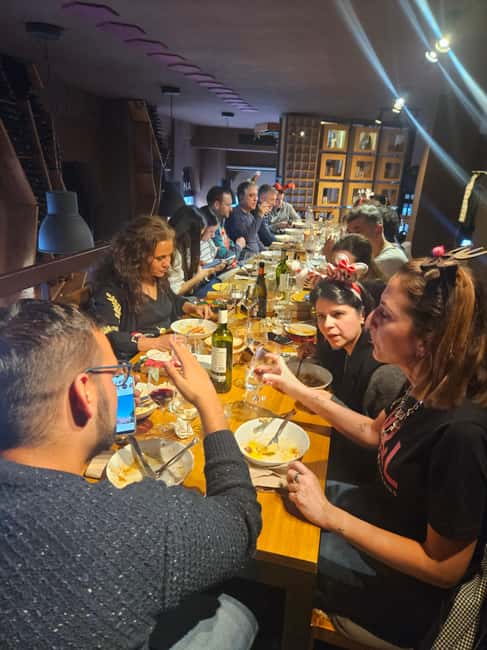
- White, rosé, red: each wine has its own short explanation so you know what you’re tasting.
- 3 tapas that balance: artisan cheese, cold cuts, and hummus are part of the pairing.
- Small-group feel: the format is limited, so the attention tends to be personal.
- Central meeting point: Vinopremier is on Calle Francisco Silvela 25, near Diego de León and Manuel Becerra.
- Good for gifts and dates: the structure makes it easy to enjoy even if you’re not a wine expert.
Vinopremier Wine Bar: where the tasting starts in Madrid
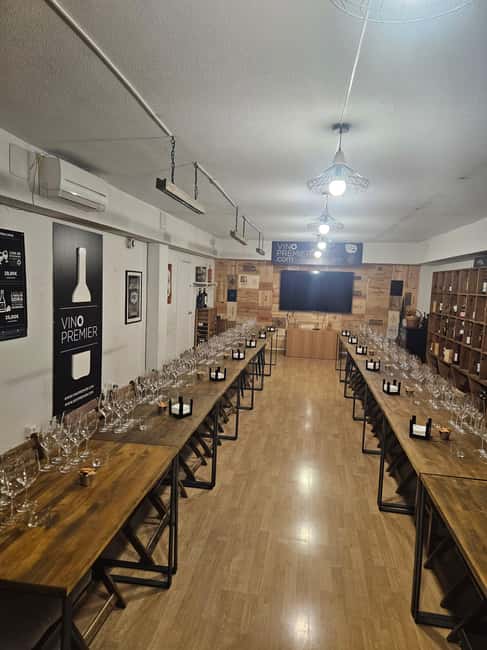
The meeting point is Vinopremier Wine Bar, Calle Francisco Silvela 25, Madrid. If you’re using the metro, the closest stops listed are Diego de León or Manuel Becerra, which makes this easy to weave into an evening in the Madrid city rhythm without a big detour.
The bar itself is the whole show. You’re not hopping between neighborhoods, and that’s the point. You show up, get seated, and move through the tasting at a comfortable pace. For a lot of people, that’s exactly how you want your first wine-and-tapas experience in Madrid: low effort, focused payoff.
You can also read our reviews of more tours and experiences in Madrid.



The flow of the tasting: 3 wine pours plus 3 tapas
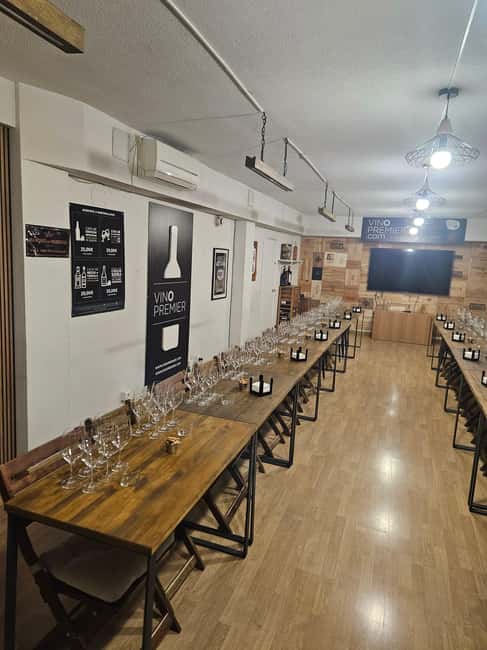
The experience is built around a simple idea: taste the wines, then learn what to notice while you eat. You’ll be served 3 glasses of wine—1 white, 1 rosé, and 1 red—and 3 tapas matched to the experience.
Here’s how it feels in practice. The host explains each wine in plain terms, then you taste and compare your impressions to the guide’s cues. After that, the tapas come in alongside, so you can test how each bite changes what you perceive in the glass.
A helpful detail: the wines aren’t described as vague labels. You get a clear character snapshot for each one:
- the white is described as fresh and light
- the rosé is described as vibrant and fruity
- the red is described as intense and elegant
That matters because it turns the tasting into something you can repeat. Instead of just drinking and hoping you remember, you start building a mental checklist.
Why this pacing works
This setup is ideal if you:
- want to try wine without committing to a big, expensive restaurant menu
- like learning a little, then tasting immediately
- prefer a guided setting over ordering blindly
It’s also nice for couples and friends because the format gives you shared talking points. Each wine has a quick purpose, and each tapa is there to balance it.
Wine 101 you can use: what to notice in white, rosé, and red
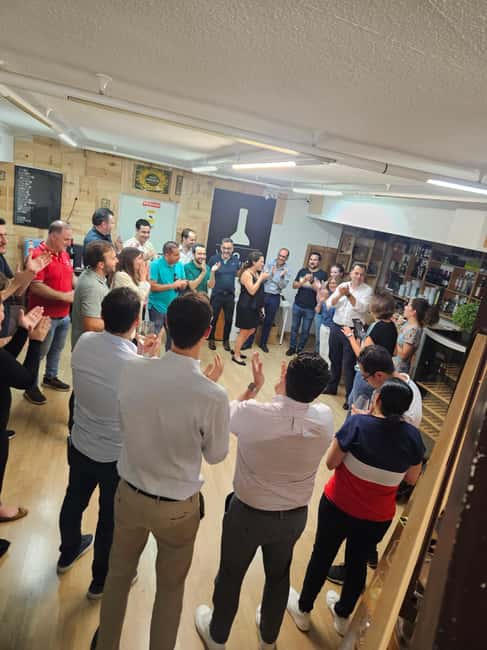
You don’t need to be a wine person to get something out of this. The tastings are structured like a guided mini-lesson, and the descriptions help you listen to your own senses.
The white: fresh and light
For a fresh, light white, I’d focus on whether it feels clean and easy on the palate. Does it seem to have bright notes, or does it feel softer and rounder? When the host gives you cues, you’re basically learning how to name what you already feel.
Practical tip: take small sips at first, then wait a few seconds before the second one. The aroma shifts quickly, and that’s where a lot of the “oh, that’s what they meant” moments happen.





The rosé: vibrant and fruity
A rosé described as vibrant and fruity usually means it’s more expressive than heavy. You’ll likely notice how fruit-forward it tastes, and whether it stays crisp or leans more smooth.
This is a good moment to compare your impressions. If the white felt airy, the rosé should feel more playful. If it doesn’t, that’s still useful information—you learn what your own palate considers fruity and what you consider fresh.
The red: intense and elegant
By the time you get to red, the tasting shifts to something deeper. “Intense and elegant” is a useful phrase because it’s not just about strength. It suggests the red has presence, but also some restraint.
Practical tip: in red tastings, your biggest win is learning the role of tannins. Without overcomplicating it, ask yourself if the wine feels drying at the edges of your mouth. If it does, notice how the food changes that.
Tapas pairing: artisan cheese, cold cuts, hummus
The tapas are not generic bar snacks. The lineup is specific: artisan cheese, cold cuts, and hummus. Even without exact brands listed, you can expect the concept to matter: each tapa is meant to pair in a way that helps you keep tasting.
Artisan cheese: flavor with character
Cheese can do a lot in a tasting. It can make wine taste rounder, and it can also highlight acidity. With a white, a cheese bite often helps you notice brightness. With a rosé, it can bring out fruit cues. With red, it can add comfort and soften intensity.
Cold cuts: salty, savory, and very Spanish in spirit
Cold cuts are a classic tapas lane for a reason: salt and fat show up fast on your palate. That’s exactly why they work with wine tasting. They can make you notice acidity and how the wine handles salt.
If you like the idea of tapas that feel distinctly Spanish and not overly fancy, this is the lane. It’s “simple but not boring,” and it tends to keep the tasting from feeling too technical.
Hummus: creamy balance
Hummus is the wildcard in a good way. It’s creamy, versatile, and usually very palate-friendly. In a wine tasting that moves from fresh to intense, hummus helps you reset your taste buds without turning the meal into a sugary detour.
If you want the session to feel smooth instead of heavy, hummus is a smart inclusion.
Service and vibe: what makes it feel special
This is where the experience earns its strong rating. The guided aspect isn’t just about pouring. It’s about how the host explains what you’re seeing in the glass.
One name that shows up is Vicente. When he’s hosting, the tone is described as close, friendly, and professional, with a clear sense that he enjoys what he does. That’s the sweet spot for a tasting: you feel looked after, but you don’t feel lectured.
Another name that’s been mentioned is Miriam, and the vibe described with her is calm and lovely. That matters more than people think. A wine tasting can easily become awkward if the pace is rushed or if explanations feel too formal. A calmer host makes it easier to actually taste and talk.
Language note: you might find explanations in French as well, since at least one booking references French-language clarity. If you need a specific language, it’s worth checking when you confirm your spot.
Price at $17: is it a good value in Madrid?
At $17 per person, this tasting is positioned as a straightforward value play. You’re getting 3 glasses of wine plus 3 tapas with explanations included.
Is it cheaper than a standard wine bar night? In many cases, yes—because you’re bundling both the drinks and the food with guidance. Even if you’re not a heavy drinker, those three pours add up quickly if you ordered à la carte.
But also be honest about what you’re buying. You’re paying for an efficient, guided tasting format. You’re not paying for a long, multi-course restaurant experience. The value comes from:
- the pairing structure
- the wine explanations
- and the fact that the tapas are included, not optional
If you’re doing Madrid on a budget, or if you want a low-stress “first wine tasting” without wasting time, it’s a solid pick.
Who should book this (and who should skip it)
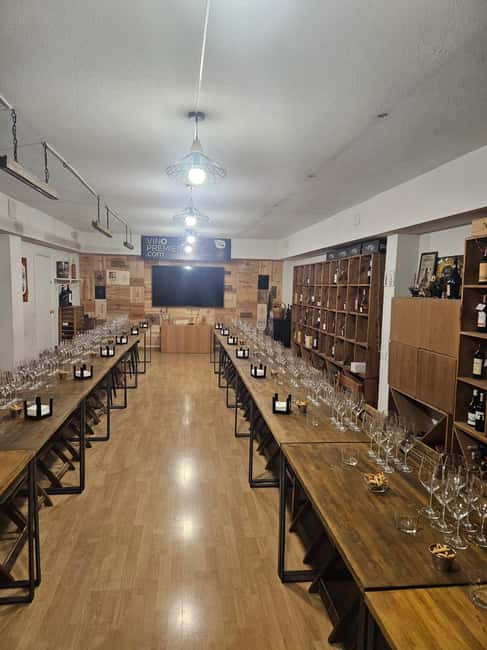
This works best if you:
- want a short, focused wine-and-tapas activity
- like guided experiences with clear explanations
- enjoy trying different wine styles without committing to one bottle
- need a date-night or friend-night plan that’s easy to understand
It may not be ideal if you:
- want a long culinary itinerary with multiple locations
- dislike structured activities and prefer fully independent pacing
- are traveling with kids, because it’s not suitable for children under 18
It’s also listed as wheelchair accessible, which is a real plus for travelers who need that certainty.
Getting the most out of your tasting
To enjoy this fully, you don’t need fancy vocabulary. You just need attention.
A few small moves that help:
- Take short notes in your phone as you go: white, rosé, red. Two words each.
- Ask yourself one question per pour: Is it more fresh or more heavy? More fruity or more savory?
- Don’t skip the tapas between wines. The food is part of the lesson, not just the snack.
And since this is a small-group setting, it’s the kind of place where you can actually speak with the host if you have a question. If you want the host to focus on one style—like staying with the white wine only—that’s the kind of personalization you can often request in this type of tasting format.
Should you book Vinopremier’s 3-wine and 3-tapas tasting?
If your goal is a simple, high-satisfaction Madrid evening—3 wines, 3 tapas, expert explanations, and a calm setting—then yes, I think you should book. It’s priced in a way that feels friendly for first-timers, and the structure means you’ll know what you’re tasting instead of guessing.
Only consider skipping if you want a longer food crawl, or if you need something designed for kids. Otherwise, this is a smart use of time near Diego de León / Manuel Becerra: easy to reach, easy to enjoy, and genuinely built around pairing you can understand.
FAQ
Where is Vinopremier Wine Bar located?
It’s at Calle Francisco Silvela 25, Madrid. The nearest metro stations listed are Diego de León and Manuel Becerra.
How much does the tasting cost?
The price is listed as $17 per person.
How long is the experience?
The experience is listed as 1 day.
What is included in the tasting?
You get tasting of 3 glasses of wine plus 3 tapas in Madrid.
What types of wine will I taste?
You’ll taste 1 white wine, 1 rosé wine, and 1 red wine.
What tapas are included?
The tapas included are: artisan cheese, cold cuts, and hummus.
Is it suitable for children?
No. It’s not suitable for children under 18.
Is the venue wheelchair accessible?
Yes, it is listed as wheelchair accessible.
Can I cancel and get a refund?
Yes. Free cancellation is available up to 24 hours in advance for a full refund.
Is Reserve and Pay Later available?
Yes. The experience is listed as reserve now & pay later, so you can book without paying today.