Paella feels like a skill, not a recipe, in Barcelona. I love the hands-on teaching pace and I love eating what you make at the same table. This class can be a great fit if you want a Spain-flavored souvenir, but the main paella is seafood-based, so you’ll want to think ahead if seafood isn’t your thing.
You’ll cook in a beautiful open kitchen space in Gràcia, tucked into a stylish 150m² venue with comfy seating and good music. Expect bottomless sangria, step-by-step coaching from a passionate Catalan chef, and an easygoing group vibe with a small maximum of 12, all in about 2 hours starting at 7:00 pm.
In This Review
- Key points to know before you go
- Entering the Gràcia kitchen at 7:00 pm
- The small-group setup that keeps you cooking, not watching
- Your menu: Catalan starters, seafood tapas, then traditional seafood paella
- Starters and tapas you’ll actually taste and practice
- The main event: traditional seafood paella
- How the sangria fits the meal (and what you’ll learn)
- What you’re really paying for: technique, not just food
- Paella tips you can use right away at home
- The venue vibe: comfy sofas, music, and a shared long table
- Price and logistics: is $81.71 a good value?
- Who should book this paella-and-tapas class
- Should you book Kampada’s Gràcia paella class?
- FAQ
- What is the duration of the paella cooking class?
- How much does the experience cost?
- Where does it take place?
- What time does the class start?
- Is the class offered in English?
- How big is the group?
- What food and drinks are included?
- What is not included?
- Can I cancel for a full refund?
- Do I need to print anything to attend?
Key points to know before you go
- Small group (max 12): you get more direct attention instead of watching from the sidelines
- Open kitchen around an island: you cook while the meal comes together right in front of you
- Catalan tapas built into the flow: charcuterie, pa amb tomàquet, mussels, and cuttlefish show up before the paella
- Bottomless sangria with a local twist: you’ll help make it and get the idea behind the local style
- End with a shared paella dinner: you cook, then sit down to eat at a long-table setup
- English-led class with a mobile ticket: easier planning if you’re not traveling in Spanish or Catalan
Entering the Gràcia kitchen at 7:00 pm
If you’ve ever tried to re-create paella at home and ended up with something that only looks right, this is the kind of class that fixes that. The big idea here is simple: you learn how to build flavor step by step, then you eat it while it’s still fresh and hot.
The class starts at 7:00 pm and runs about 2 hours. That timing works well for travelers who want a proper dinner without committing to a late-night meal. You meet at L’ExquisEat on Carrer de Santa Magdalena in Gràcia, and the experience ends back at the same spot.
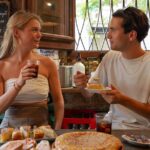
Gràcia matters because it feels more local than the postcard center. You’re tucked away in a neighborhood known for its calmer streets and neighborhood energy, not just major sights. And the venue itself is part of the charm: an open kitchen setup in a 150m² space with cozy seating, dining tables, and great music playing in the background.
You can also read our reviews of more tours and experiences in Barcelona.

The small-group setup that keeps you cooking, not watching
This class caps at 12 people, which changes everything. With a bigger group, you’re often stuck waiting your turn. Here, the pace stays active, and you’re more likely to get real feedback while you cook.
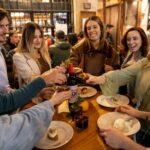
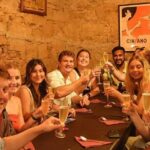
The teaching style is hands-on and collaborative. In practice, that means the chef explains, then you do. The group dynamic is part of the fun: people chop, toast, stir, and laugh while they work. One detail I really like is how relaxed it is. You’re not in a stiff, formal setting where you feel like you’re interrupting. It’s more like a dinner party that teaches you actual technique.
You’ll cook in a kitchen that’s open and visible, with the meal built around an island-style station. That layout makes it easier to learn by watching the chef’s hands and then doing the same movements yourself. A long shared table comes at the end, so the night doesn’t turn into a “quick class then goodbye” routine.
Your menu: Catalan starters, seafood tapas, then traditional seafood paella
This isn’t a “tiny snack class.” You’ll be fed. The menu is built like a proper Catalan-style meal: starters and tapas first, then the main seafood paella.
Starters and tapas you’ll actually taste and practice
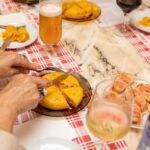
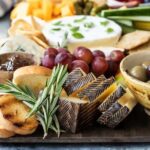
You start with Catalan charcuterie, including fuet. Fuet is a traditional cured sausage from high-quality pork, seasoned with black pepper and air-dried. It’s salty, peppery, and a good warm-up for the rest of the evening.
Next comes pa amb tomàquet, also known as pan con tomate. This is one of those deceptively simple Catalan classics: toasted bread rubbed with ripe tomato, olive oil, and salt. You’ll see how much difference the right tomato and a careful rub make. It’s not fancy. It’s just very, very good.
Then you move into seafood tapas:
- Grilled cuttlefish (sepia a la plancha) with garlic and parsley sauce, served with a bold ají sauce for a bit of a kick
- Mussels in marinera sauce, cooked with a rich tomato, garlic, and white wine base
If you like seafood, this part of the meal is the sweet spot because the flavors are clear and Mediterranean. If you don’t, note that seafood shows up in multiple parts of the menu, not only the paella.
The main event: traditional seafood paella
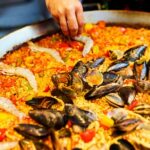
For the main, you’ll make a traditional seafood paella. Paella is basically about the balance of rice, liquid, and heat control. In a classroom setting like this, the value is learning what to do when you’re not sure, like when to adjust the process so the rice ends up with the right texture and the seafood stays tender.
Because the paella is seafood-forward, it’s a good choice if you want to bring home a paella method that feels authentically Spanish rather than generic “yellow rice with toppings.” It’s also a good reminder that paella flavor isn’t just seasoning. It’s the overall cooking process.


How the sangria fits the meal (and what you’ll learn)
Part of the fun here is that the chef and the team aren’t only focused on the cooking steps. The dinner rhythm matters. As you work, you enjoy an open bar of refreshing sangría.
What’s nice is the sangría isn’t treated like an afterthought. The setup is described as a barra libre where sangría is made by the participants, and you’ll hear about the local recipe approach. You also get bottled water included, which is handy if you want to pace yourself.
The result is a relaxed atmosphere: you chop and toast, then you snack, then you cook and stir, then you sit down. It’s the kind of flow that makes the experience feel social without losing the fact that you’re learning real techniques.
There’s also something practical about learning the dinner rhythm. At home, cooking paella often fails because people rush the process or treat it like a one-step task. Here, the meal structure trains you to think in stages.
What you’re really paying for: technique, not just food
At $81.71 per person, you’re paying for three things that often cost more separately: guided instruction, a full meal, and drinks. Even if you’re not trying to become a paella chef, the value is in the step-by-step coaching and the chance to correct mistakes while you’re still in the cooking window.
You also get quality ingredients and a full dinner experience: dinner service in Gràcia, open-kitchen cooking around the island, and a cozy atmosphere lit by candles. In other words, you’re not just tasting a dish and leaving. You’re participating.
One more point that adds value: you can ask the guide for tips and recommendations after the tour ends. That’s useful because paella at home usually needs a couple of small adjustments based on your equipment and your heat source. A good follow-up conversation can save you from repeating the same “why didn’t this work” cycle.
Paella tips you can use right away at home
You’ll be learning professional tips and tricks aimed at getting paella right. While your exact instruction depends on the chef and the flow of the class, the overall lesson is consistent: you’ll learn how to manage the cooking sequence and how to build flavor with the right Mediterranean components.
Here’s what you should pay attention to as you cook:
- The order of steps: paella isn’t only about stirring. It’s about when things go into the pan
- Heat control: the texture of the rice comes down to how the liquid behaves while cooking
- Seafood timing: you want tender seafood, not rubbery pieces
- Flavor layering: tomato, garlic, and the Mediterranean base show up across the menu, not only in the paella
The best part is that you’re practicing with guidance. When you leave with your own paella dinner under your belt, your brain now has a real reference point for how it should feel and smell at each stage.
The venue vibe: comfy sofas, music, and a shared long table
This is one of those classes where the space supports the experience. You’re cooking in a stylish 150m² venue with comfy sofas and dining tables. Music is part of the background, which helps keep the tone upbeat rather than classroom-only.
Then comes the payoff: you sit down to paella dinner at a long table where everyone shares the meal together. That shared table format matters more than it sounds. It pushes the experience from a “drop-in activity” into a real evening of food and conversation, which is often what people want from Barcelona food experiences.
Also, if you’re someone who runs late, there’s evidence the host is accommodating and will help you find the right place. Still, try not to test that. Just plan to arrive a little early so you can settle in before cooking starts.
Price and logistics: is $81.71 a good value?
For $81.71, you’re getting:
- a 2-hour cooking session in an open kitchen
- Catalan starters and tapas, including fuet and pa amb tomàquet
- grilled cuttlefish and mussels in marinera sauce
- traditional seafood paella you make yourself
- bottled water
- alcoholic beverages via bottomless sangria
What’s not included is soda/pop and private transportation. That’s pretty normal, but it matters if you’re choosing this as your only planned activity. You’ll want to handle your own way to the meeting point using public transit.
A small group and a full meal are what justify the price. If you were to do a food tour plus a cooking class separately, it would likely cost more and feel less structured. Here, the meal and the lesson are tied together.
One more practical note: the experience is booked about 41 days in advance on average. That tells me it’s a popular slot. If you’re traveling in peak season or you want a specific day, book early so you’re not stuck with whatever time remains.
Who should book this paella-and-tapas class
This class is ideal if you want:
- a hands-on way to learn paella basics you can repeat later
- a Barcelona food night that includes both tapas and a full main dish
- a small-group setting with time to chat and ask questions
It’s also a strong pick for couples and small groups because the kitchen layout and long-table dining make it easy to feel included. One review-style detail that matches the vibe is how the team stays close and keeps things moving from minute one, with clear explanations and humor.
Who should consider skipping or adjusting plans:
- If you do not eat seafood, be cautious. The menu includes grilled cuttlefish, mussels, and a traditional seafood paella.
- If you only want a light snack or a slow-paced tasting, this may feel like a full meal experience with active cooking rather than a relaxed tasting-only evening.
Should you book Kampada’s Gràcia paella class?
Book it if you want a dinner that teaches you something real. The combination of an open-kitchen format, a maximum of 12 people, and a full menu (including seafood paella and sangria) is a strong value for a short, focused 2-hour slot.
Don’t book it if seafood is a hard no or if you’re looking for a silent, formal cooking seminar. This is a social, chat-as-you-cook kind of night.
If you do book, do one smart thing: ask questions about how to replicate the paella at home using your cookware and heat source. That’s where the class becomes more than a fun night. It becomes an actual skill you can reuse long after you leave Barcelona.
FAQ
What is the duration of the paella cooking class?
The class lasts about 2 hours.
How much does the experience cost?
It costs $81.71 per person.
Where does it take place?
It takes place in Barcelona’s Gràcia neighborhood, starting at L’ExquisEat, Carrer de Santa Magdalena, 9, 08012 Barcelona.
What time does the class start?
The start time is 7:00 pm.
Is the class offered in English?
Yes, it’s offered in English.
How big is the group?
The class has a maximum of 12 travelers.
What food and drinks are included?
You’ll have tapas and dinner items such as fuet, pa amb tomàquet, grilled cuttlefish with garlic and parsley sauce with ají, mussels in marinera sauce, and traditional seafood paella. Alcoholic beverages include sangria (barra libre), plus bottled water.
What is not included?
Soda/pop and private transportation are not included.
Can I cancel for a full refund?
Yes. You can cancel up to 24 hours in advance for a full refund.
Do I need to print anything to attend?
You’ll receive a mobile ticket.