REVIEW · SANTA MARIA CAPE VERDE
Sal: Espargos City Tour, Local Life, and Cape Verde Tapas
Book on GetYourGuide →Operated by Sal Experiences · Bookable on GetYourGuide
Street art in Espargos changes how you see Sal. This short guided stroll through the economic heart of the island adds real texture to a place many people only pass through, and it’s especially strong on street art and neighborhood detail.
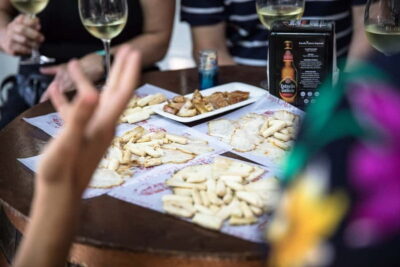
I also like the way the tour treats you to local Cape Verdean food and drinks without making it feel like a theme-park stop. You get a guided aperitif with snacks, and you’ll taste tapas-style local bites along the way, all with hotel pickup and return included.
One thing to consider: this isn’t a sit-on-a-bus-and-ride tour. You should expect a 20 to 40 minute walk, and it’s not suitable for wheelchair users.
In This Review
- Key highlights in plain terms
- Espargos is where Sal becomes real
- How pickup and transport keep your day simple
- The Amílcar Cabral airport stop: small time, big context
- Historic center walking: street art, stories, and an easy pace
- The traditional village photo stop that feels like a breather
- Aperitif and tapas: the best part of the cultural translation
- The viewpoint: quick skyline payoff
- Suburbs and morabeza: the relaxed side of Espargos
- Price and value: what $35 gets you in 150 minutes
- Who should book—and who might prefer something else
- My quick decision checklist
- Should You Book the Sal Experiences Espargos City Tour?
- FAQ
- How long is the Espargos City Tour, Local Life, and Cape Verde Tapas?
- How much does it cost?
- Where do you get picked up and dropped off?
- What food and drinks are included?
- Will I need to walk a lot?
- Is the tour suitable for wheelchair users?
- What languages is the guide available in?
Key highlights in plain terms

- Expert local guide walking you through Espargos rather than just driving past it
- Street art hunt in the historic center, with time to look closely and take photos
- Aperitif and tapas with typical Cape Verdean drinks and snacks (including cheese tasting)
- Amílcar Cabral airport stop to understand how development shaped the city
- Viewpoint panoramic stop for a quick reset and skyline views
- Morabeza moments in the suburbs, focused on the locals’ relaxed pace
Espargos is where Sal becomes real
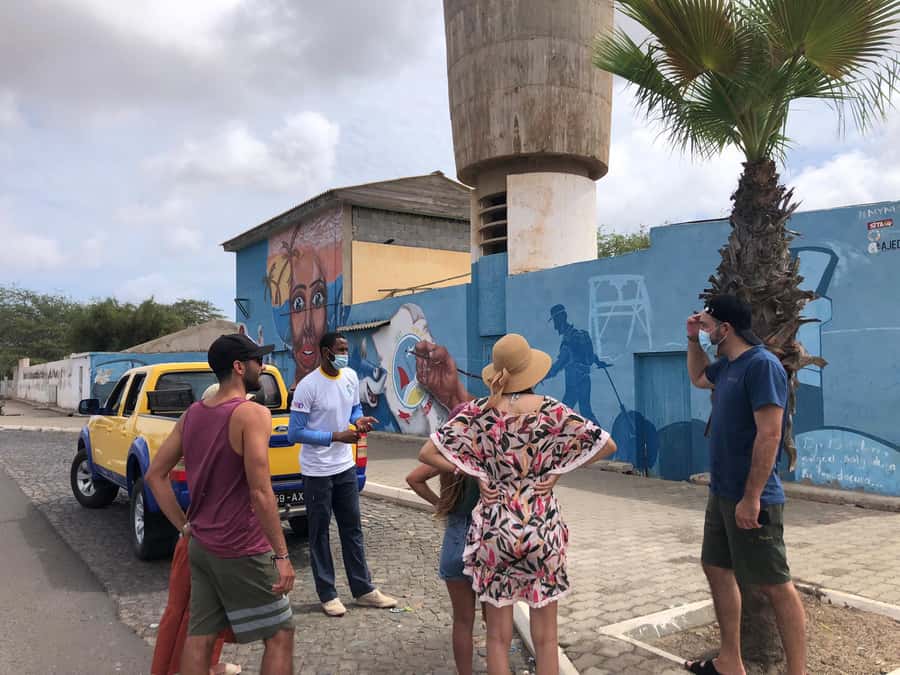
Sal is famous for beaches and easy days. Espargos, the island’s economic center, is different. Here you see the everyday rhythm: streets where people actually live, storefront life, and wall art that looks like it belongs to the neighborhood—not to a brochure.
What makes this tour work is the balance. You’re not only looking at buildings. You’re connecting what you see on the street with the stories your guide shares—how Espargos formed, what matters to locals, and why certain places feel the way they do.
And yes, the street art is a big draw. It turns an ordinary walk into something visual and fun, especially if you enjoy photography but also like hearing what’s behind the images.
You can also read our reviews of more tours and experiences in Santa Maria Cape Verde.
How pickup and transport keep your day simple
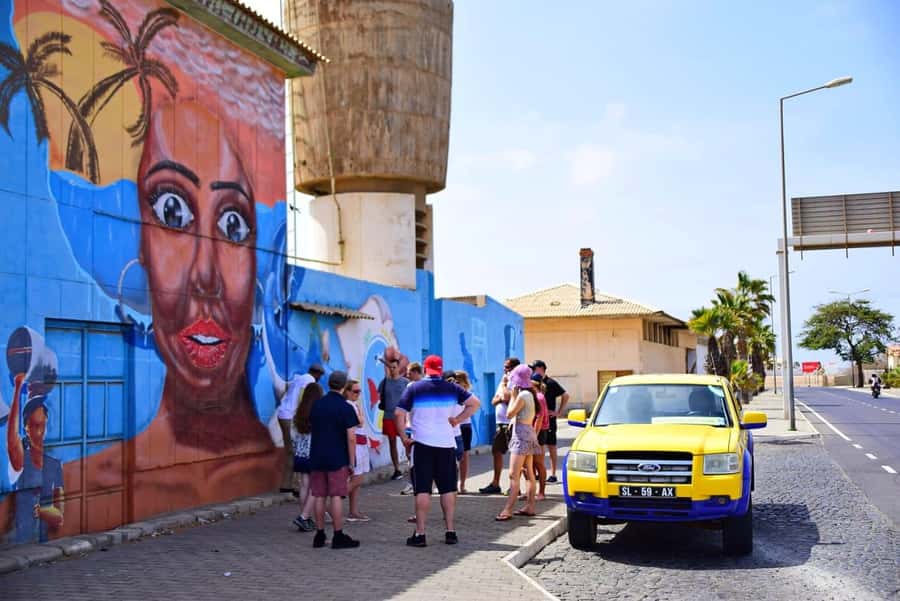
This tour is built around convenience. You can be picked up from Santa Maria, Espargos, or Murdeira, plus other designated options. The plan is straightforward: you meet at your hotel lobby or the pickup point, then head toward Espargos by coach.
A small detail that I’d take seriously: you’re asked to look for a yellow sign written Sal Experience at pickup. If you’re more than 5 minutes late, you should contact the check-in person via the call or WhatsApp number on your voucher. That kind of punctuality matters when you’re transferring from hotel to hotel.
The rides themselves are also part of the appeal. Several recent experiences mention a clean, comfortable car and a more sheltered setup than the open-air feel you sometimes get on other tours. You’ll spend most of the day out and about, but the transport is there to keep things easy.
Also note the rule about luggage: no luggage or large bags. If you’re traveling light, great. If you’re carrying a lot, plan ahead so you don’t end up stressed at pickup.
The Amílcar Cabral airport stop: small time, big context

Before you reach the heart of Espargos, you’ll pass by Amílcar Cabral International Airport. Even though it’s not a long visit, it’s a smart context stop.
The tour gives you a quick chance to learn why the airport’s construction mattered for the city’s development. It’s the kind of fact that helps the rest of the walk make sense. When you understand how infrastructure shaped where people work and move, the streets stop feeling random.
If you like being able to connect the dots—economy to neighborhoods, transit to daily life—this stop earns its place.
Historic center walking: street art, stories, and an easy pace
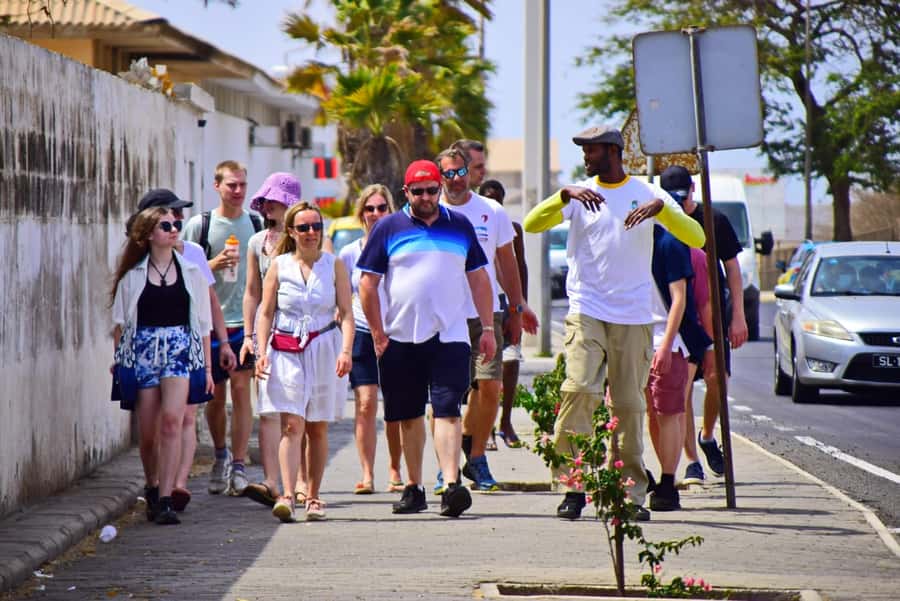
Once you’re in Espargos, the tour shifts from riding to walking. The historic center section is where you’ll get your best “look around” time. You’ll stroll through key streets and notice details you’d miss on your own.
The street art hunt is the standout. You’re not just seeing art; you’re learning to read it. Some pieces reflect culture, some reflect daily life, and the overall effect is that the walls feel like part of the conversation of the city.
There’s also a guided stop approach: you’ll pause at points of interest, not just walk past. That’s helpful because street art often rewards slow looking.
Practical tip: bring comfortable shoes. The city walk is described as 20 to 40 minutes total, and the overall tour requires a moderate fitness level. It’s not a marathon, but it is enough walking that you’ll want your feet to be happy.
One more practical note: a few people mention the day can feel fast because the tour is short. So if you tend to ask lots of questions, it helps to come in curious and ready—your guide can do a lot, but the schedule is still only 150 minutes.
The traditional village photo stop that feels like a breather
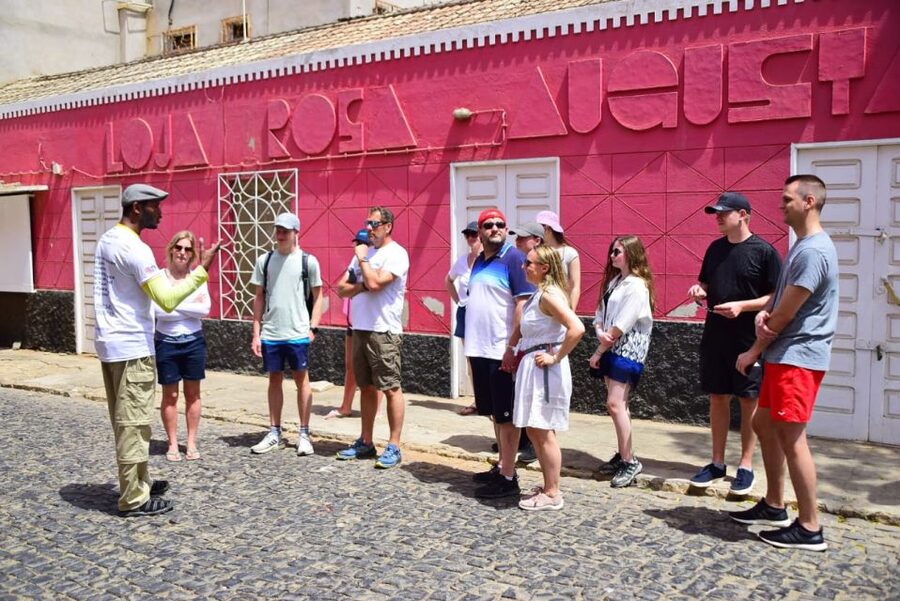
Along the way, you’ll pass through a traditional village area as a photo stop and guided sightseeing moment. This is where you get a change of pace. Even with short stops, it breaks up the city walk and gives you another angle on how daily life and visual culture show up away from the biggest streets.
Think of this part as a chance to reset your camera brain and look at what’s common and local rather than what’s staged.
Aperitif and tapas: the best part of the cultural translation
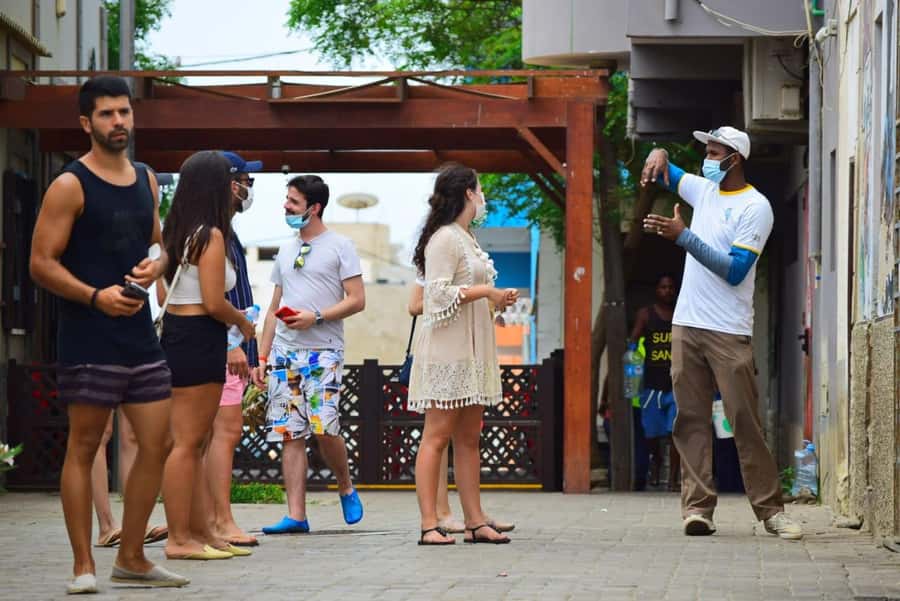
Food is where cultural understanding becomes real, fast. This tour includes an aperitif break at a local spot, with typical Cape Verdean drinks and snacks.
What you can expect during the break:
- an aperitif with typical Cape Verdean drinks
- cheese tasting
- local snack samples
- tapas-style bites
I like that it’s not only one heavy meal. It’s tasting, so you can try multiple flavors without feeling stuck with a single choice. And the atmosphere matters here: several experiences emphasize friendly hosts and a welcoming restaurant vibe, which makes the food feel like part of the community, not just a transaction.
One thing to plan: tapas often includes seafood ingredients. If you avoid fish, tell your guide or restaurant staff right away. A recent experience mentioned that a partner didn’t eat fish and the tapas choices were limited because of that. You’ll protect your enjoyment by flagging it early.
If you’re traveling solo, this food stop is also a nice social moment. You’re guided, but you’re eating in a real place where people talk and react to what you’re trying.
The viewpoint: quick skyline payoff

After the food break, you’ll walk back toward a viewpoint. This is described as a panoramic view, and it works well as a mental reset after streets and snacks.
Even if you’re not a big “stand and stare” person, viewpoint timing helps you digest what you just saw. You can look out at the town and put the blocks and walls you walked through into a bigger picture.
This is also a good spot for photos that show context: the street art you saw earlier is great, but views give you a sense of the city layout.
Suburbs and morabeza: the relaxed side of Espargos
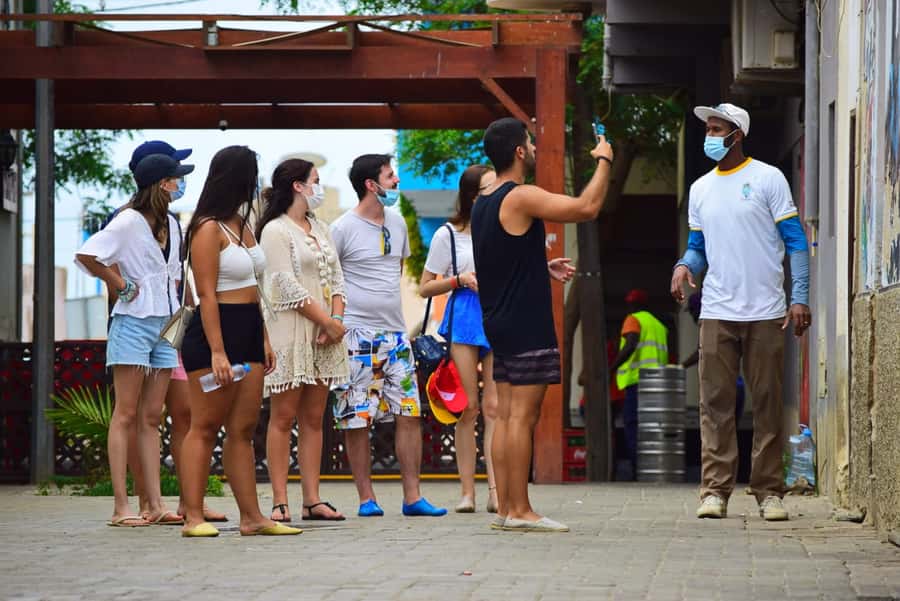
The final movement is into the suburbs, where the tour aims to show the “stress-free” way of life locals live day to day. The key term here is morabeza, basically Cape Verdean hospitality—the way people make space for others, with warmth and calm rather than hurry.
This part of the tour isn’t about big monuments. It’s about normal life: the kind of streets and routines that make a city feel lived-in.
You’ll return toward your pickup area (or drop-off), with the day ending back at your hotel. It’s a neat wrap because you finish with the “how people live” feeling, not with a final photo spot that fades fast.
Price and value: what $35 gets you in 150 minutes

At $35 per person for about 150 minutes, the value comes from three things working together.
First, you’re getting guided time. The guide isn’t only pointing out sights; they’re connecting history and daily life to what you see on the streets. That kind of context is hard to recreate by yourself without local knowledge.
Second, you’re paying for transport plus pickup and drop-off. If you’re staying in Santa Maria, Espargos, or Murdeira, the included transfers remove the hassle of figuring out local routing.
Third, the food component is real value. The tour includes an aperitif with snacks and beverage plus tapas-style tastings (including cheese tasting). For a short city tour, that’s more than a token bite.
Is it perfect for everyone? Not if you want an all-day deep dive. But if you want something compact, meaningful, and easy to fit into a vacation schedule, the pricing feels fair for what’s included.
Who should book—and who might prefer something else
This tour is a strong match if you:
- want local life in Sal’s main town, not just beach time
- like street art and photo walks with guided context
- enjoy tasting local food and drinks as part of learning the culture
- want hotel pickup and a low-stress schedule
It’s less ideal if you:
- can’t handle a moderate walk (the tour includes 20 to 40 minutes on foot)
- use a wheelchair (it’s not suitable for wheelchair users)
- need very flexible pacing or long stop times (the overall time is tight by design)
The tour notes that a private tour can be personalised for mobility issues, and it’s accessible for pushchairs. So if mobility is the main concern, it’s worth asking about customization before you decide.
My quick decision checklist
If you’re staying on Sal and you only have a small window to learn Espargos, this is one of the best bets. You get street art, neighborhood storytelling, panoramic views, and a real tasting break—without burning your whole day.
Should you book this tour?
Should You Book the Sal Experiences Espargos City Tour?
I’d book it if your goal is a practical, human-scale look at Espargos. The tour’s strongest points are the street art walk, the aperitif/tapas tasting, and the fact that pickup and drop-off keep it easy from Santa Maria, Espargos, or Murdeira.
I’d think twice only if your top priority is minimal walking or if wheelchair access is required. For everyone else—especially first-time visitors who want local texture beyond the beach—this is a smart way to spend 150 minutes.
FAQ
How long is the Espargos City Tour, Local Life, and Cape Verde Tapas?
The tour lasts 150 minutes.
How much does it cost?
It costs $35 per person.
Where do you get picked up and dropped off?
Pickup is available from multiple locations including Santa Maria, Espargos, and Murdeira (plus other designated pickup options). Drop-off is also available at Santa Maria, Espargos, and Murdeira.
What food and drinks are included?
You’ll have an aperitif with snacks and a beverage, plus Cape Verdean drinks and snacks. The tasting includes local snacks, tapas-style bites, and cheese tasting.
Will I need to walk a lot?
You should expect 20 to 40 minutes of walking during the city portion, so you’ll want a moderate fitness level. Bring comfortable shoes and water.
Is the tour suitable for wheelchair users?
No. It is not suitable for wheelchair users. It is listed as accessible for pushchairs, and a private tour can be personalized for mobility issues.
What languages is the guide available in?
The live tour guide is available in Spanish, Portuguese, English, and French.