REVIEW · BARCELONA
Gothic Quarter Insights & Tapas Experience
Book on Viator →Operated by Icono Spain Tours · Bookable on Viator
Roman walls, gothic lanes, and pintxos on foot. In just about 2.5 hours, this Gothic Quarter tour strings together Barcelona’s oldest streets, starting near Roman traces and ending at the neighborhood’s iconic churches. You’ll follow a guide who can switch between English, Spanish, French, and Italian depending on the group.
I love two parts of this experience. First, you get a planned break at the end: one pintxo and one drink are included, so you don’t spend the best part of your afternoon hunting for food. Second, I like how the stops map Barcelona’s layers—Roman-era leftovers, medieval civic spaces, and Catalan Gothic buildings in a tight walk.
One consideration: this is a walking route on narrow streets. You’ll be on your feet for roughly 2.5 hours, so comfortable shoes really matter.
In This Review
- Key highlights I’d plan around
- A Medieval Walk With Pintxos Built In
- Price and Value: What You’re Really Paying For
- Meeting Point, Timing, and How to Prepare
- Plaça Nova: Joan Brossa’s Barcino Letters Against Roman Ground
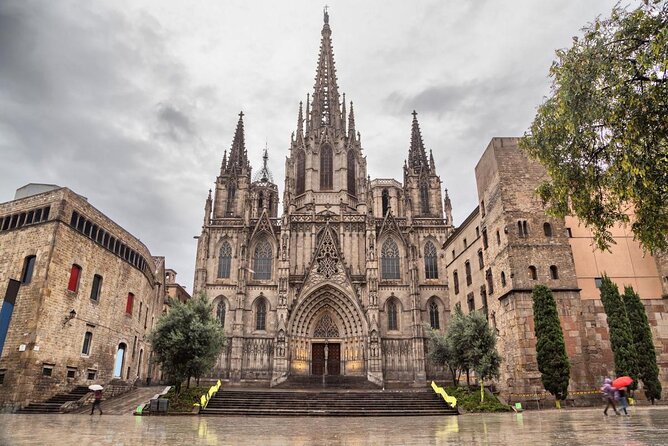
- Catedral de Barcelona Area: Portal del Bisbe and the Roman City Edge
- Casa de l’Ardiaca: Medieval Church Power Up Close
- Placa Sant Felip Neri: A Labyrinth Corner That Opens Into Calm
- Placeta del Pi: Gothic Church, Two Squares, and Artist Energy
- Plaça del Rei: Royal Medieval Atmosphere in a Peaceful Enclosure
- MUHBA Temple d’August: Rome’s Columns Survived for Real
- Santa Maria del Mar: The Old Town’s Neighborhood Cathedral
- Carrer de Montcada: Medieval Civic Street From Chapel to Born
- Pintxos and Drinks: How the Included Stop Helps You Explore After
- Who This Tour Suits Best
- My Bottom Line: Should You Book This Gothic Quarter Walk?
- FAQ
- What time does the tour start?
- How long is the experience?
- Where do we meet the guide?
- Is this tour offered in English?
- What’s included in the price?
- Are there admission fees for the stops?
- Is hotel pickup included?
- What group size should I expect?
- Can I bring a service animal?
- Can I cancel for a full refund?
Key highlights I’d plan around
- Plaça Nova’s Barcino letters by Joan Brossa: a playful art moment against serious ancient stone
- Portal del Bisbe / New Square: a window into the old Roman wall and the medieval city layout
- Casa de l’Ardiaca: an ecclesiastical power house with a courtyard and terrace feel
- MUHBA Temple d’August: 2,000+ year-old Roman columns inside the Gothic fabric
- Santa Maria del Mar: the Old Town’s church built by the neighborhood community
- Pintxos stop included: one planned snack moment with your guide before you head out
A Medieval Walk With Pintxos Built In
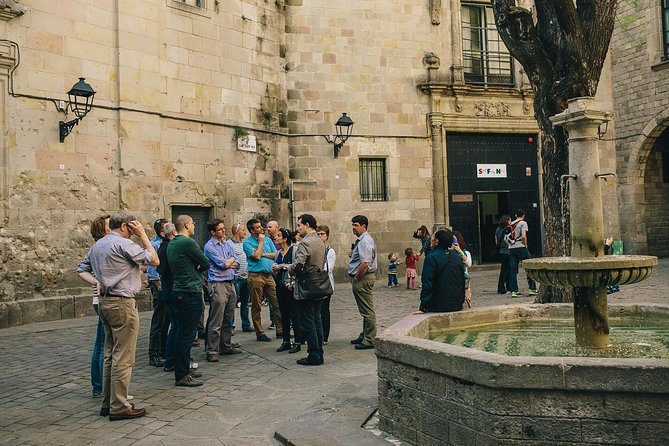
This tour is built for an easy win: you get a guided stroll through the Gothic Quarter while your body stays fueled. The price includes one pintxo and one drink, so your afternoon doesn’t turn into a series of quick snacks and wrong turns.
The pacing works well if it’s your first time in the area. Instead of trying to connect the dots on your own, you follow a route that hits major medieval landmarks and explains how they fit together. It’s also a group format, so you can ask questions without stopping the flow.
And yes, this is a walking experience. Expect lots of street-level views—alley corners, small squares, church exteriors—and frequent moments where looking up matters as much as moving forward.
You can also read our reviews of more tours and experiences in Barcelona.



Price and Value: What You’re Really Paying For
$54.06 per person might sound like a lot for a walk, until you break down what’s included. You’re paying for three things that add up fast in Barcelona: a professional guide, a structured route that covers key sites in the Old Town, and a snack + drink that ends the loop.
Because the sights on the route list admission as free, the cost isn’t being inflated by entry fees. You’re essentially buying orientation plus interpretation—someone to connect Roman traces to medieval architecture to what you see in the streets today.
If you already have a full lunch planned, you might feel the pintxo perk less. But if you want a smooth afternoon where food is handled, this is a very practical value.
Meeting Point, Timing, and How to Prepare
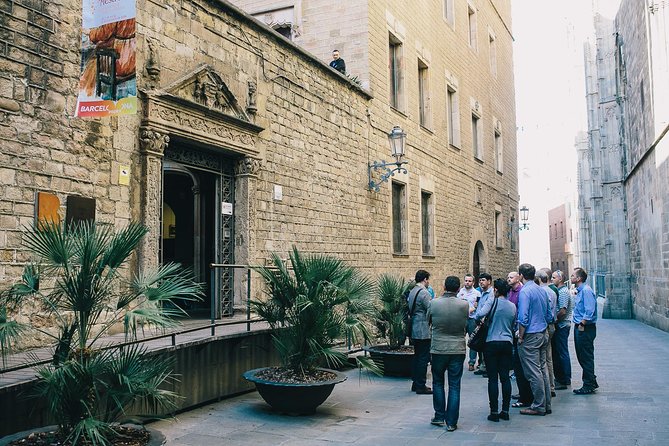
The tour meets at Lamaro Hotel Barcelona, Av. de la Catedral, 7, in Ciutat Vella. It starts at 3:30 pm and runs about 2 hours 30 minutes, ending back at the same spot.
You’ll get a mobile ticket, and the group size is capped at 20 people. That matters because it keeps the walk comfortable—less crowding at corners and more chance to hear the guide when you stop.
Bring comfortable shoes. The route moves through narrow lanes and small squares, where cobblestones and tight turns can slow you down. Also, bring a little flexibility with timing: some stops are short, so you’ll want to be ready to look, take photos, and move on.
Plaça Nova: Joan Brossa’s Barcino Letters Against Roman Ground
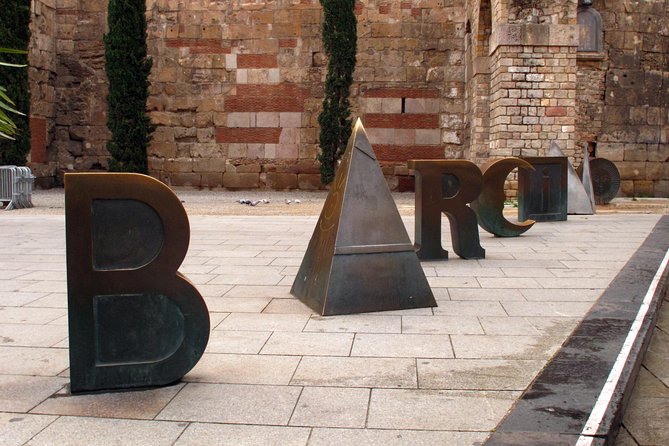
Your first stop lands at Plaça Nova, where giant letters spell out Barcino. It’s an art installation by Joan Brossa, designed to echo the ancient name of the city—Colonia Iulia Augusta Faventia Paterna Barcino—site-adjacent to the Roman story of Barcelona.
What I like about starting here is that it sets the theme instantly. This isn’t a tour that only talks about medieval churches. It plants you right next to the idea that Barcelona layers time on top of time.
Expect a quick stop—enough to notice the bronze and aluminum letters bolted to the ground and to understand why this kind of visual poem fits the city. Then it’s onward, because the best way to see the Gothic Quarter is moving through it in chunks.
Catedral de Barcelona Area: Portal del Bisbe and the Roman City Edge
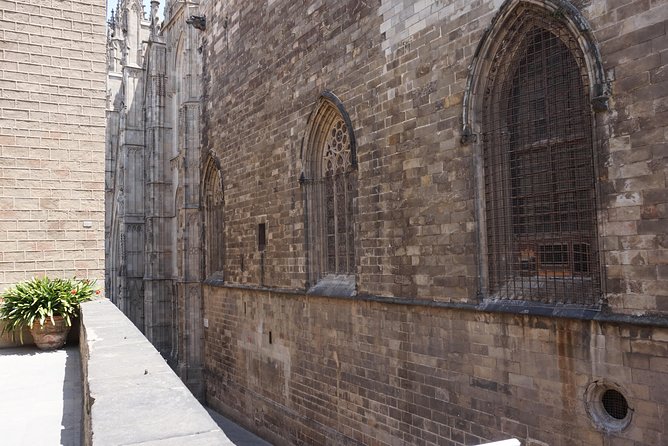
Next you head toward the area known as the Catedral de Barcelona / Palace of the Bishop area and the New Square in front of the Porta Praetoria of the Roman wall, called the Portal del Bisbe.
This is a “how did the city change?” stop. The description here connects the Episcopal setting to the walled Roman city structure below and around it. In other words, you’re not just seeing a church landmark—you’re seeing how Roman urban planning shaped what came later.
The New Square was created in 1355 when water was channeled to Collserola Sant Jaume Square, and buildings facing the Portal del Bisbe were removed. That kind of detail matters because it explains why the space feels open where you might expect dense construction.
It’s a short stop, so don’t treat it as a lengthy photo session. Instead, look for the relationship between the stone surroundings and the idea of a city wall that once defined the edge.





Casa de l’Ardiaca: Medieval Church Power Up Close
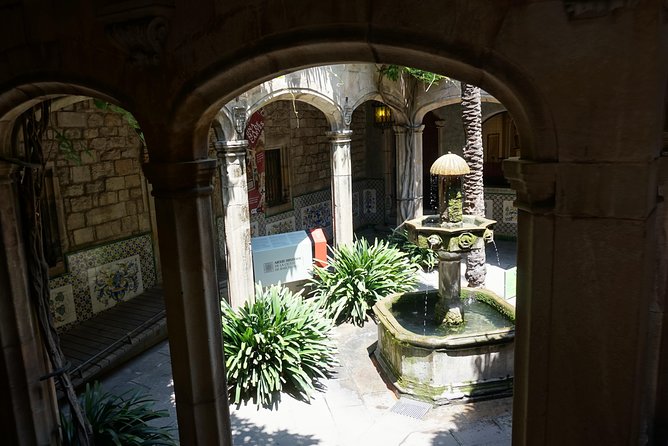
Casa de l’Ardiaca is next, and it’s a great contrast to the big-ticket church exteriors. This residence served the ecclesiastical hierarchy starting in the 12th century, then got altered over time, including changes in the early 16th century that connected it with the dean’s residence.
What you’ll notice here is the blend of periods. A porticoed central courtyard and Renaissance-style decoration were added on top of a flamboyant Gothic foundation. The result is a building that feels like it grew in layers rather than being built all at once.
There’s also a staircase leading to an upper terrace and balcony that’s often described in Shakespearean terms—Romeo-and-Juliet style. You might not linger long, but it’s one of the spots where the architecture helps you picture how authority lived day to day in medieval Barcelona.
If you like buildings that show change over centuries, this stop will click for you.
Placa Sant Felip Neri: A Labyrinth Corner That Opens Into Calm
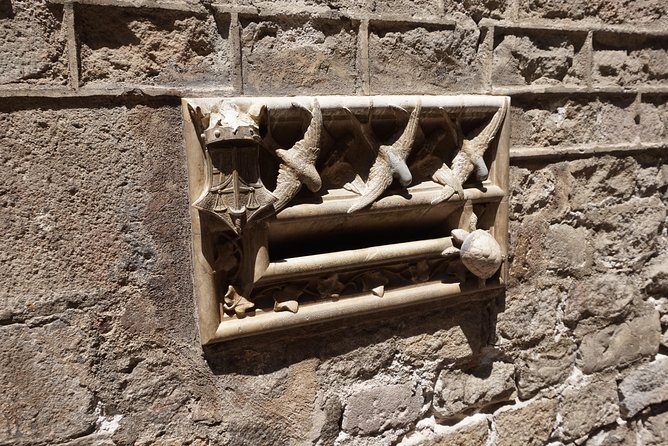
From there, you burst out of the Gothic Quarter’s tight lanes into Placa Sant Felip Neri—a tiny square with a fountain, overlooked by the baroque church of Sant Felip Neri.
This pause is more than scenery. The nearby buildings once housed guild trades like shoemakers and coppersmiths, which moved here from Carrer de la Bòria and Carrer de la Corribia. It’s a reminder that this “old stone” area wasn’t only about religion and royalty—it was also about work, craft, and everyday urban life.
And because it’s small, you get a reset moment. In a walking tour, those breathing spaces are part of the value. You’ll likely feel the difference between the narrow street pressure and this little pocket of quiet.
Don’t expect a long stop here. Expect a moment that helps you breathe and then move on with better attention.
Placeta del Pi: Gothic Church, Two Squares, and Artist Energy
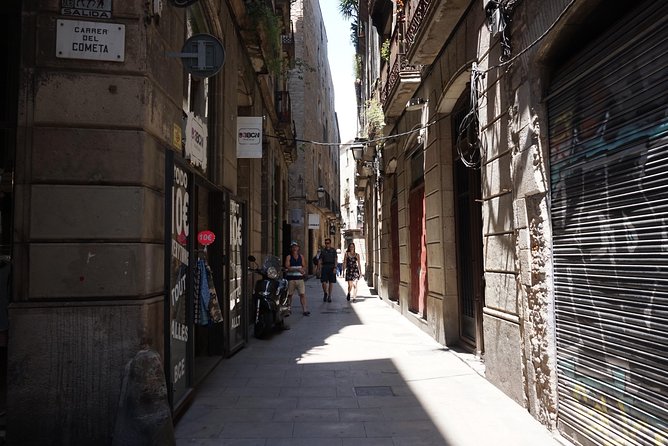
Placeta del Pi is one of the most visually rewarding corners in the route. You’ll come across a Gothic basilica with two picturesque squares around it—an arrangement that makes the area feel like multiple scenes in one block.
In the past, cemeteries surrounded the 14th-century church. Today those areas are small squares where painters and artisans show their work. Even if the exact display varies day to day, the function of the space is clear: a public area that invites people to linger.
This is a good place to slow down for photos. The building, the geometry of the squares, and the street activity all frame well from multiple angles.
If you’re the type who likes to understand how public space evolves, this stop gives you a simple answer: people repurpose the land, but they keep using it socially.
Plaça del Rei: Royal Medieval Atmosphere in a Peaceful Enclosure
Then you reach Placa Del Rei, a monumental medieval ensemble known as Conjunt Monumental de la Plaça del Rei. This square is enclosed by the royal palace (Palau Reial Major) and surrounding buildings, creating a sense of medieval order even now.
The key idea is right in the description: it’s one of the Gothic architecture ensembles that best shows Barcelona’s medieval past. The atmosphere here tends to feel calm, almost like the square holds the noise outside while you focus on the facades and layout.
It’s a 10-minute stop, so treat it as a “read the room” moment. Look at how the buildings define the space. Notice how a royal civic setting becomes a square you can stand in comfortably in the present.
If you only have time for one royal-feeling stop, this is a strong choice.
MUHBA Temple d’August: Rome’s Columns Survived for Real
One of the best kept-feeling moments on the route is MUHBA Temple d’August. It sits on Carrer Paradís and includes a small medieval courtyard where four columns from the Temple of Augustus have survived for over 2,000 years.
This stop is the tour at its most “wait, that’s real?” level. Roman architecture—right there—woven into the Gothic Quarter you’re walking through. You’re not just hearing a story; you’re standing in the remnants.
It’s easy to miss this kind of site if you’re wandering on your own, and that’s exactly why guided routes help. The guide points you to places you might skip, then gives you enough context to understand why the columns matter.
Don’t rush. Even at a short stop length, you can take in the courtyard setting and the scale of the columns. It changes how you view the entire neighborhood.
Santa Maria del Mar: The Old Town’s Neighborhood Cathedral
Basilica de Santa Maria del Mar is often treated like the Old Town’s real cathedral, and the reason is practical: it was founded and built in medieval times by the people of the neighborhood themselves.
That detail shapes how the church feels. It’s not just a monument placed over everyone else’s life. It’s tied to the community that supported its construction, which helps you understand why the Gothic style here reads as local and human-sized.
You’ll get a focused look during the stop, enough to appreciate it as an emblem of Catalan Gothic. If churches are your thing, this is a must in the route for both architecture and meaning.
And if you’re not a church person, Santa Maria del Mar is still worth it because the community connection makes the building feel less untouchable.
Carrer de Montcada: Medieval Civic Street From Chapel to Born
The tour wraps with Carrer de Montcada, now known as an important area of medieval civic architecture in Barcelona. The street runs in a historical arc, starting with the Romanesque Marcus chapel from the 12th century and ending near Plaça del Born.
It used to be one single street, but in the 19th century it was divided by the opening of Carrer Princesa in 1853. The name also ties to a major family in Barcelona—the Montcada—connected to support lent to King Ramon Berenguer IV by Guillem Ramon de Montcada during the conquest of Majorca.
This is a strong closing stop because it helps you see that the Gothic Quarter isn’t only churches and squares. It also holds civic streets, elite residences, and the long timeline of urban growth.
If you love architectural detail, this is where you’ll notice how the street rhythm creates character.
Pintxos and Drinks: How the Included Stop Helps You Explore After
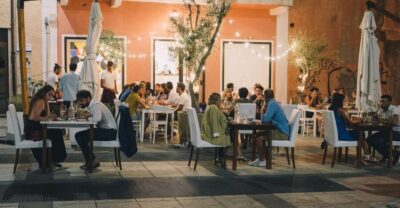
The tour ends with pintxos and a drink included. That’s not just a perk; it’s a strategy. You finish the loop with a taste of Catalan bar culture right when you’re already oriented to the streets around you.
If you’re new to the terminology, your guide can help you sort out the difference between pintxos and tapas while you’re eating. Having that explained during your actual snack is the fastest way to remember it.
Also, don’t treat the included pintxo as your whole meal. It’s one pintxo plus one drink, which is perfect as a reset, then you can decide what you want for dinner depending on where you are that night.
One practical bonus: some guides go beyond the script for small, real-life needs like shopping help. If you care about taking something edible home, watch for the guide’s suggestions and ask what they’d pick for gifts.
Who This Tour Suits Best
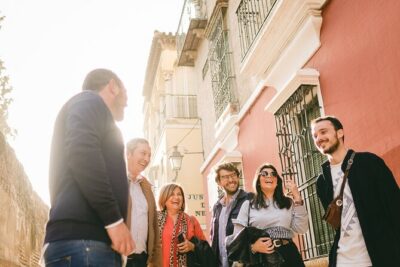
This experience is a great fit if you want a short, guided route through the Gothic Quarter without overthinking it. It works well for first-timers who want to understand the area quickly, and history lovers who like seeing Roman and medieval layers in one walk.
It’s also a good choice for group travelers who want the easy social factor of a group setting. With a cap of 20 people, you’re less likely to feel buried in a crowd.
If you hate walking, skip it. If you’re okay with steady movement through historic streets and you want an organized route with food included, you’ll probably enjoy it.
My Bottom Line: Should You Book This Gothic Quarter Walk?
Yes, I’d book it if you have an open afternoon and you want a smart way to learn what you’re looking at. The combination of guided storytelling, a tight set of high-impact stops, and a built-in pintxo + drink makes this feel like more than just a sightseeing stroll.
Book it especially if you’re short on time. You’ll come away with a mental map of Barcelona’s old center—Roman traces, medieval squares, and Catalan Gothic landmarks—plus a snack plan that keeps you moving.
FAQ
What time does the tour start?
It starts at 3:30 pm.
How long is the experience?
It runs for about 2 hours 30 minutes.
Where do we meet the guide?
The meeting point is Lamaro Hotel Barcelona, Av. de la Catedral, 7, Ciutat Vella, 08002 Barcelona, Spain.
Is this tour offered in English?
Yes, it is offered in English.
What’s included in the price?
You get one pintxo, one drink, and a professional guide.
Are there admission fees for the stops?
The stops listed all show admission ticket free.
Is hotel pickup included?
No, hotel pickup and drop-off are not included.
What group size should I expect?
The tour has a maximum of 20 travelers.
Can I bring a service animal?
Yes, service animals are allowed.
Can I cancel for a full refund?
Yes. You can cancel up to 24 hours in advance for a full refund.