REVIEW · ALICANTE
Alicante:Evening Spanish Tapas Cooking Class with Live Music
Book on GetYourGuide →Operated by Free Walking Tours Alicante · Bookable on GetYourGuide
Tapas and guitar, in one two-hour night. What makes this Alicante evening special is that you cook a full menu with a local chef using Central Market ingredients, then finish with live Spanish guitar. I love that you’re not just watching—you actually make multiple tapas dishes. I also love the take-home recipes, so you can repeat the flavors later. One possible drawback: it can run chilly in cooler weather since shutters may stay open, and with a larger class you might spend a little time waiting while others cook.
The vibe is cozy and social, like people from Alicante rotating through a real working kitchen and then sharing the meal at the end. In one recent class, the chef (named Fred in one review) was praised for clearly explaining what to do and for tying stories and local terms to each dish, plus playing music in a band. If you’re traveling with dietary needs, you’ll want to plan ahead because vegetarian and allergy-friendly options are available on request.
In This Review
- Key Things I’d Mark on Your Alicante Map
- Where You Start: Bollitori Near Alicante’s Central Market
- How the 2-Hour Class Actually Feels (Not Just What You Cook)
- Your Tapas Menu: What You’ll Make, and Why These Dishes Work
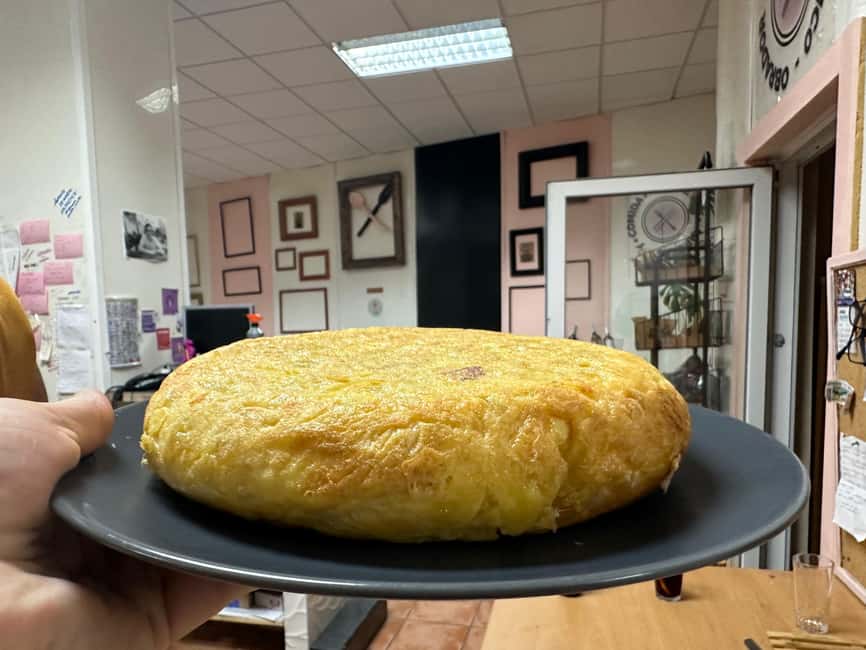
- Tortilla de patatas (Spanish omelette)
- Gazpacho
- Bacon-wrapped dates
- Chorizo a la sidra
- Pork tosta with turrón sauce
- Torrija with turrón ice cream (dessert)
- The Dinner Part: Sit Down, Eat What You Made
- Live Spanish Guitar: The Musical Finale That Makes It Feel Local
- Price and Value: Does $42 Make Sense for What You Get?
- Dietary Needs, Language Comfort, and Practical Tips
- Who This Alicante Evening Suits Best
- Should You Book This Alicante Tapas Cooking Class?
- FAQ
- Where does the tapas cooking class meet in Alicante?
- How long is the experience?
- What food is included in the class?
- Is a drink included?
- Can the menu be adapted for vegetarian or allergies?
- Is live music included?
Key Things I’d Mark on Your Alicante Map
- Central Market ingredients: fresh produce and staples used in class, sourced the same day
- A real local kitchen at Bollitori: you’re cooking where people actually eat, not in a demo room
- A full tapas dinner in 2 hours: 5 tapas dishes plus dessert, with a drink included
- Hands-on menu variety: from cold gazpacho to hot chorizo a la sidra and sweet torrija
- Music as the finale: live Spanish guitar to soundtrack your meal
Where You Start: Bollitori Near Alicante’s Central Market
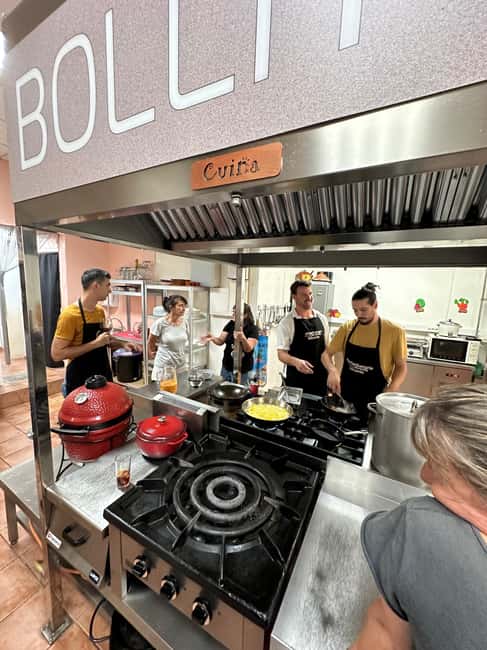
This class meets at a restaurant called Bollitori, at Calle Manuel Antón 19—close enough to the action that you can feel the market area without getting lost in it. The key landmark is Alicante’s Central Market. From there, you’ll walk a few minutes to the venue.
One practical thing to know: Calle Manuel Antón is split by La Lonja parking lot. When you’ve got the Central Market behind you and the sea behind you as a reference point, the cooking space is on the left-hand side of the parking lot. It’s near Plaza Músico Óscar Tordera. That little detail matters if you’re arriving in the dark, tired, or both.
If you’re the kind of traveler who likes arriving a few minutes early, this is a good place to do it. You’ll be fed soon, you’ll need to check in, and you’ll want a calm minute before aprons and cutting boards start flying.
You can also read our reviews of more tours and experiences in Alicante.

How the 2-Hour Class Actually Feels (Not Just What You Cook)
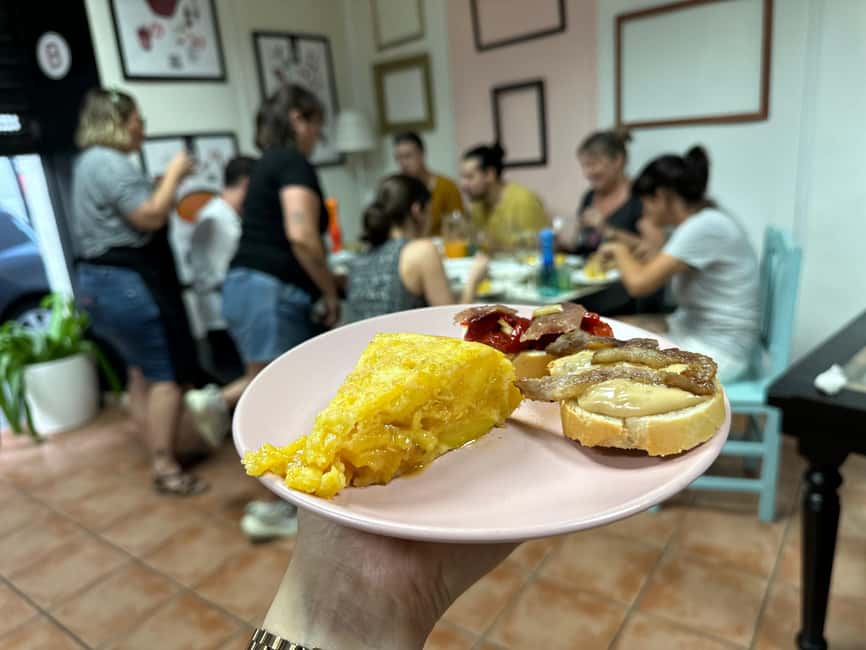
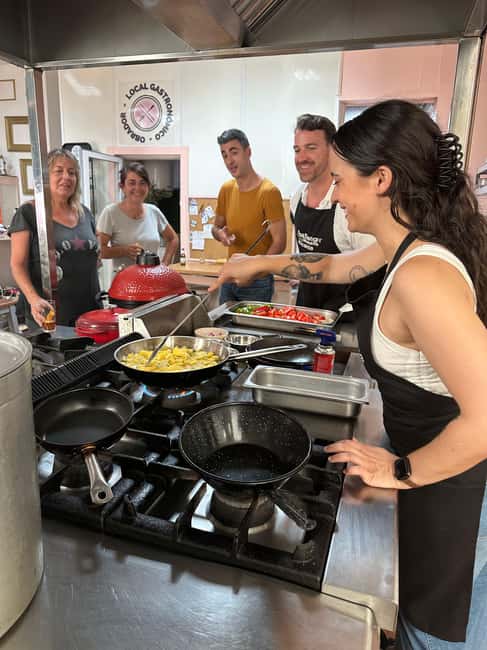
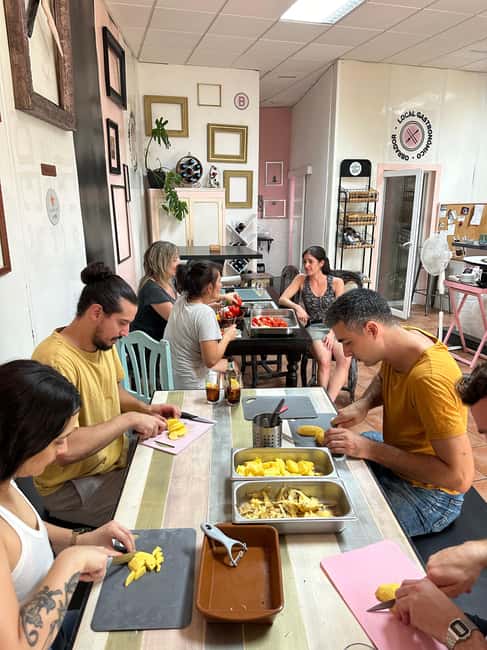
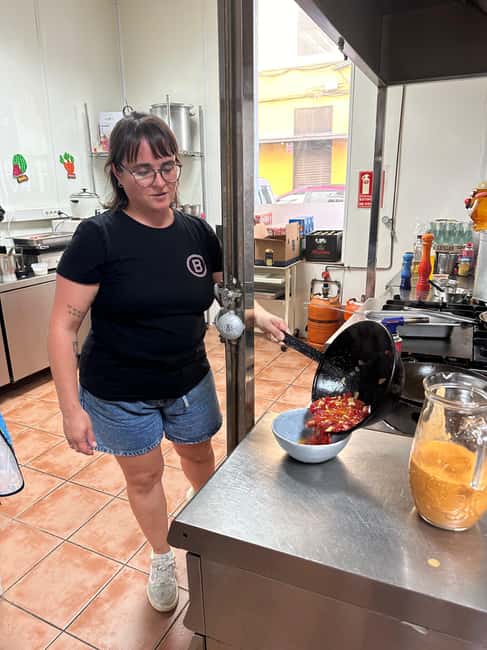
The whole experience is built around a simple idea: you learn by doing. You’ll cook in a real local kitchen with a chef and a host, and you’ll work through prep tasks like chopping, mixing, and tasting. Even though you’ll be in a group, it doesn’t feel like school. It feels like dinner planning with instructions.
In practice, this means two things for you:
1) You’ll get real momentum fast because the menu is designed to be learnable in a short evening.
2) You’ll likely rotate tasks at the right pace, but group size can change the flow.
A recent review mentioned a group of around 14 people, and that at times you may stand and watch others work rather than doing every single step yourself. That’s not a deal-breaker, but it’s a heads-up. If you strongly want a hands-on role the whole time, consider that group sizes may be smaller in some seasons—one review noted the class became just two participants in off-season, which would make the experience feel much more personal.
Also, check the room temperature. One person specifically noted it was chilly because shutters were kept open. So even if Alicante feels warm earlier in the day, pack a light jacket for the evening. You’ll feel better once you’re sitting down to eat.
Your Tapas Menu: What You’ll Make, and Why These Dishes Work
This isn’t a random sampler. The menu mixes classic Spanish comfort, Mediterranean freshness, and sweet finishes—so you leave with a balanced understanding of what tapas nights can be.
Here’s what’s on the menu, and what to expect from each dish:
Tortilla de patatas (Spanish omelette)
This is one of Spain’s best-known staples. In the class, you’ll learn how the dish comes together and how it should feel—solid enough to hold its shape, but still tender. Even if you’ve had tortilla before, making it yourself is a different experience. You’ll understand why it’s such a go-to tapa: it’s satisfying, portable, and works with lots of other flavors on the table.
Gazpacho
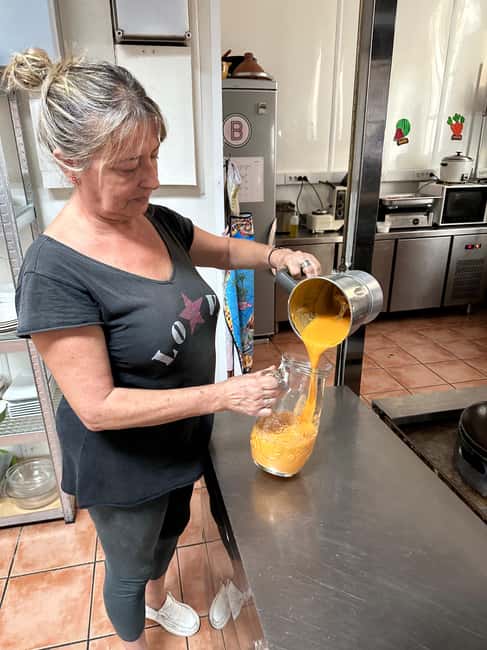
Gazpacho is your cool, refreshing reset. You’ll work with ingredients that are meant to be eaten without heavy cooking, which is a great contrast to the hotter dishes later. It’s also a reminder of how central fresh produce is to Mediterranean eating. If you’ve been walking all afternoon, gazpacho makes the evening feel lighter.





Bacon-wrapped dates
This one gives you sweet-salty contrast. You’ll likely assemble and cook in a way that helps the bacon do what it’s supposed to do: bring savory richness that balances the sweetness of the dates. It’s a tapa that feels like a party appetizer, but it’s also simple enough to make sense of in a class.
Chorizo a la sidra
This is where the evening shifts into warm, savory territory. Chorizo a la sidra adds flavor depth by pairing chorizo with cider-based cooking. You’ll taste the difference between eating chorizo on its own versus as part of a simmered, sauce-like preparation. It’s the kind of tapa that smells great even before you take the first bite.
Pork tosta with turrón sauce
You’ll get a bread-based tapa with a sweet element through turrón sauce. A “tosta” is basically a toasted base, and the sauce adds a recognizable Spanish sweetness that connects to regional favorites. Even if you’re not a huge turrón fan, you’ll probably enjoy this version because it’s part of a larger flavor story, not just a candy-like finish.
Torrija with turrón ice cream (dessert)
Torrija is the Spanish version of French toast vibes—so think soft, custardy, comforting. In this menu, it comes with turrón ice cream, which ties the dessert back to that turrón theme you tasted earlier in the tosta. It’s a strong ending because it’s both familiar and still clearly Spanish.
Across the menu, the ingredient sourcing is part of the point. You’ll use fresh items from Alicante’s Central Market, which means the dishes aren’t built on long-life pantry shortcuts. That makes it easier to understand the taste differences you’d notice if you cooked at home.
The Dinner Part: Sit Down, Eat What You Made
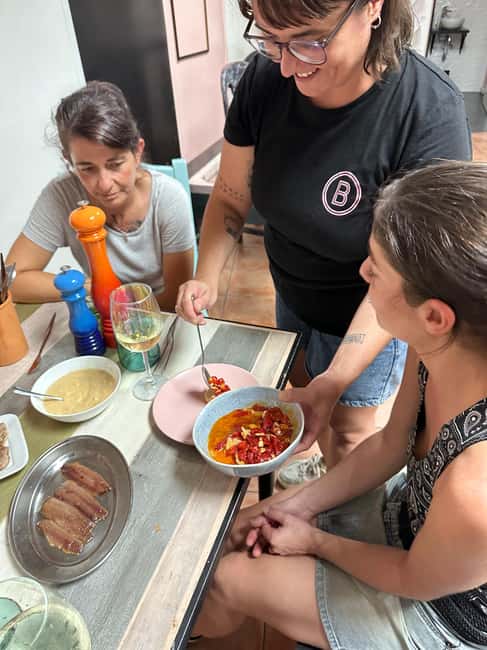
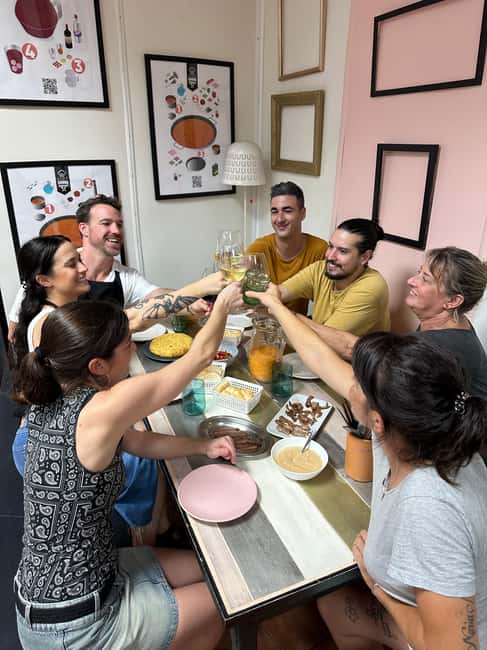
After the cooking, you’ll eat together. This is a full tapas dinner: five dishes plus dessert, plus your chosen drink. You’ll also have bottled still water throughout the evening.
A few practical thoughts so you can enjoy this without feeling rushed:
- If you can, show up on time with some appetite. You’ll be cooking and then eating soon after.
- Plan to slow down once you sit down. The meal is part of the teaching moment, not just a reward.
- If you want something beyond the included drink, you can add extra alcoholic drinks during booking.
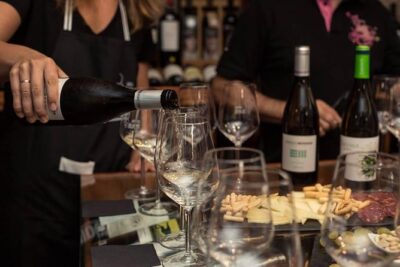
One drink is included: wine, beer, soft drink, or homemade sangria. Sangria is a crowd-pleaser in Spain, and the fact that it’s homemade makes it feel less like a generic add-on and more like part of the night.
The pacing is also why this works well for visitors who don’t want an all-evening food tour. At 2 hours, you get a complete meal arc: cook, taste, eat, and then finish with music.
Live Spanish Guitar: The Musical Finale That Makes It Feel Local
The evening doesn’t end when the plates are cleared. It ends with live Spanish guitar.
That detail matters more than it sounds. In lots of tourist experiences, music is background noise. Here, the guitar show is built as the final course experience—something you can listen to while relaxing with your drink and digesting the food you just cooked.
A review highlighted that the person teaching and playing also had music in a band, which matches the overall feel. The result is an evening that feels like a Spanish night out, not just a cooking activity with dinner tacked on.
If you’re in Alicante for a short time, this is a smart add-on. It keeps the night memorable without needing extra reservations or transport to a separate venue.
Price and Value: Does $42 Make Sense for What You Get?
At $42 per person for a 2-hour class, this price can be a very good value—mostly because you’re paying for more than instruction.
You’re getting:
- Tapas cooking with a local chef and host
- A full homemade dinner: 5 tapas + dessert
- One included drink
- Still water during the experience
- Fresh ingredients from Central Market
- Apron and kitchen equipment
- Recipe copies to recreate everything later
- Live Spanish guitar at the end
If you’ve ever paid for a tapas dinner in Spain, you know the cost adds up once you include drinks. Here, the menu is structured like a real sit-down spread, not just a couple of small plates. Plus you’re leaving with recipes, which turns the class into a repeatable experience rather than a one-night meal.
So for good value, I’d think of this as: you’re buying a guided way to learn how Spanish tapas are assembled at home level. Then you eat the results. That’s a double payoff.
Dietary Needs, Language Comfort, and Practical Tips
This experience is designed to be friendly for a range of diets. Vegetarian and allergy-friendly options are available with advance notice. Gluten-free options are also available on request.
That means you should contact the provider ahead of time with specifics. Don’t just say allergy; tell them what you can’t eat so the kitchen can plan. The class includes cooking and tasting, so it helps if they can adjust early.
Language is also a plus. The instructor supports English and Spanish. If your Spanish is limited, you’ll still be able to follow what’s happening at your station and understand what you’re tasting.
A few practical tips based on what’s clearly worked for others:
- Bring a light jacket for evening chill. Shutters may be kept open, and kitchens can cool fast after sunset.
- Expect some “watching moments” if the group is larger (around 14). It’s normal in shared kitchens.
- If you’re going in off-season, you might get more individual attention. Classes can be smaller then.
Who This Alicante Evening Suits Best
This is a great fit if you want a hands-on activity that still ends with a proper meal and a real cultural touch. I’d especially recommend it for:
- Food lovers who want practical skills, not just tasting
- Couples and small groups who like a social setting but also want to cook
- Travelers who enjoy learning the story behind dishes—one review specifically praised the way the chef connected food with local terms
- People who want an evening plan that’s contained and doesn’t require separate dinner reservations
It may be less ideal if you want a totally hands-on experience where you never pause to watch. The class can run with larger group sizes, and there can be some waiting depending on how many people are booked.
Should You Book This Alicante Tapas Cooking Class?
Book it if you want a fun, guided way to learn Spanish tapas while also enjoying a full dinner in a local kitchen setting. The ingredients from Central Market, the recipe copies, and the live Spanish guitar finish are the big reasons this feels worth your time.
Skip it (or at least rethink expectations) if you’re extremely sensitive to temperature and you’re traveling on a cool evening, since shutters may stay open. Also consider your preference for hands-on time if you dislike sharing kitchen stations with a bigger group.
In short: if you’re hungry for an authentic Alicante night with food, music, and actual cooking, this hits the mark.
FAQ
Where does the tapas cooking class meet in Alicante?
The meeting point is at the restaurant Bollitori, Calle Manuel Antón 19, a few minutes’ walk from Alicante’s Central Market.
How long is the experience?
The class lasts 2 hours.
What food is included in the class?
You’ll cook and then eat a full tapas dinner with 5 dishes plus dessert: tortilla de patatas, gazpacho, bacon-wrapped dates, chorizo a la sidra, pork tosta with turrón sauce, and torrija with turrón ice cream.
Is a drink included?
Yes. You get one drink of your choice, which can be wine, beer, soft drink, or sangria.
Can the menu be adapted for vegetarian or allergies?
Vegetarian, gluten-free, and allergy-friendly options are available with advance notice.
Is live music included?
Yes. The experience ends with a live Spanish guitar performance.