REVIEW · ALICANTE
Evening Spanish Tapas Cooking Class with Live Guitar Music
Book on Viator →Operated by Free Walking Tours Alicante · Bookable on Viator
Six small plates can change your trip.
In Alicante, you’ll spend an evening in a real, fully functioning kitchen preparing Spanish tapas that feel the way locals eat them. The experience blends cooking, stories behind the dishes, and a relaxed sit-down meal, then ends with live Spanish guitar to keep the Mediterranean mood going. It’s the kind of activity that turns dinner into something you understand, not just something you consume.
I love how practical it is: you’ll actually cook multiple items, not just watch. I also like the attention to people and language support, with Frederico (often called Fred) guiding and translating so the English experience stays smooth. One thing to consider: the pace and number of dishes you personally handle can vary a bit in a small class, so if you want nonstop chopping and stirring the whole time, you may want to show up ready to jump in.
In This Review
- Key highlights you’ll feel the moment you arrive
- Alicante’s tapas class, set in a kitchen people actually use
- How the 2 hours 15 minutes actually works
- The Frederico-led English support (and what that means for you)
- From Central Market to the pan: why the ingredient story matters
- The menu: what you’ll cook and why each item matters
- Tortilla de patatas (Spanish omelette)
- Gazpacho
- Secreto toast with turrón sauce
- Delicias de Elche (dates wrapped in bacon)
- Chorizo a la sidra
- Torrija with turrón ice cream (dessert)
- Eating the tapas you cooked (and why it feels more real)
- Live Spanish guitar: a local finish that actually fits
- Price and value: is $42.01 a fair deal?
- Who this class suits best (and a fair note on trade-offs)
- Quick tips to make the evening easier
- Should you book this Alicante tapas cooking class?
- FAQ
- What time does the Alicante tapas cooking class start?
- Where is the meeting point?
- How much does it cost?
- What language is the class offered in?
- What’s on the menu?
- Will the experience include live guitar music?
- How big is the group?
- Are vegetarian options available?
- What if I need to cancel?
Key highlights you’ll feel the moment you arrive
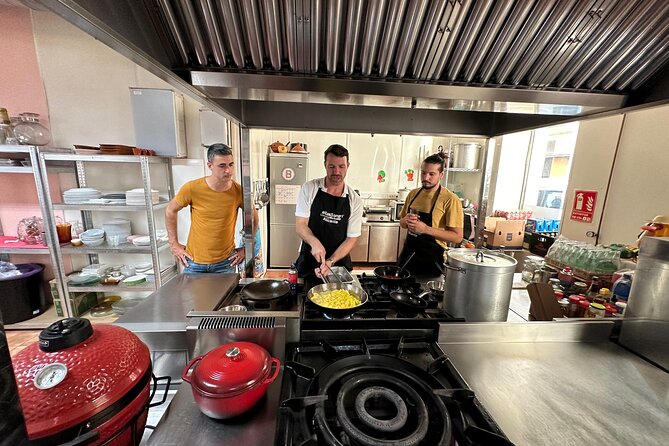
- A working Alicante kitchen where people eat every day, not a demo setup
- Seasonal ingredients from the Central Market used for your menu
- Hands-on cooking with clear steps and a friendly, organized team
- English guidance through Frederico (Fred) and a host/chef-led class
- A full tapas dinner you sit down to eat together
- Live Spanish guitar as the final, very local touch
Alicante’s tapas class, set in a kitchen people actually use
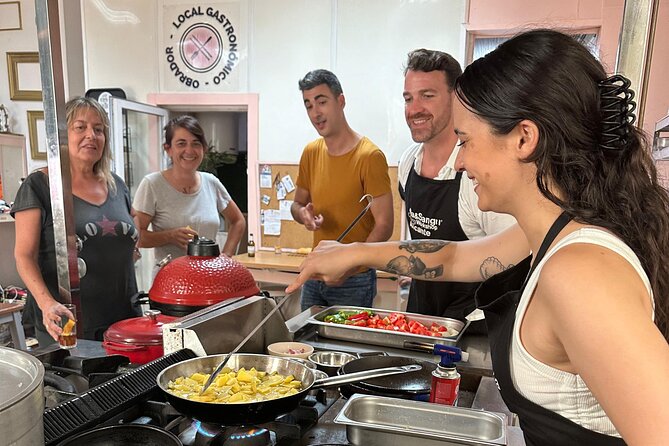
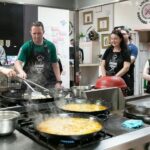
This evening class starts in central Alicante at C. Manuel Antón, 19 (03004). Meeting there matters more than it sounds: you’re not shuttled to a distant cooking school. You’re in the city, close to everyday life, with the feeling that you’re stepping into a real routine rather than into a staged show.
The format is intimate, with a maximum of 16 travelers. That size is a sweet spot. Big enough that you feel lively and social, small enough that the chef and host can actually help with technique when something needs fixing.
You’ll also be in a kitchen that’s fully functional. That changes the vibe. You get proper tools, proper heat, and the reality of timing in a working environment. No overproduced theatrics—just good organization and clear instruction.
You can also read our reviews of more tours and experiences in Alicante.

How the 2 hours 15 minutes actually works
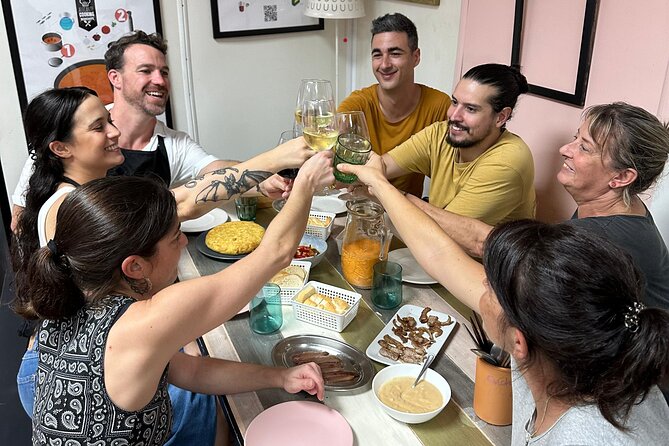
The class runs about 2 hours 15 minutes, starting at 6:00 pm. The evening is structured around three phases: cooking, eating, and the guitar finish.
First, you’ll prepare items for a full tapas dinner. Even when multiple dishes are on the menu, the group keeps moving. You don’t wait around forever, and you’re guided through the steps.
Then you eat what you cooked. That’s a big deal. Many food tours end with a photo op. Here, the meal is part of the lesson, so you can taste the results, compare flavors, and ask questions while everything’s still fresh.
Finally, you’ll end with live Spanish guitar music. It’s not just background noise. It’s a gentle way to close the evening and enjoy the Mediterranean atmosphere you’ve been cooking all along.
The Frederico-led English support (and what that means for you)
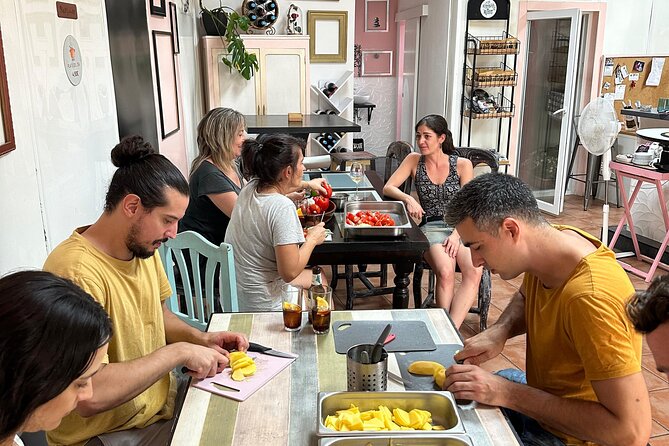
This is an English-offered class, and Frederico (Fred) is a big reason the evening flows well. In practice, you may find the chef working from the Spanish side of the kitchen while Frederico translates and helps you follow along. That setup keeps the class authentic without leaving you behind.
If you’re comfortable in kitchens, you’ll love the hands-on rhythm. If you’re not, you’ll still be okay. The steps are described in a way that makes it realistic to repeat at home, with guidance that doesn’t assume you already know Spanish cooking technique.
One more practical benefit: a small team atmosphere. Even when the menu is ambitious, the host and chef keep it friendly and organized, so questions don’t feel awkward. You can focus on learning instead of just surviving the dinner rush.
From Central Market to the pan: why the ingredient story matters
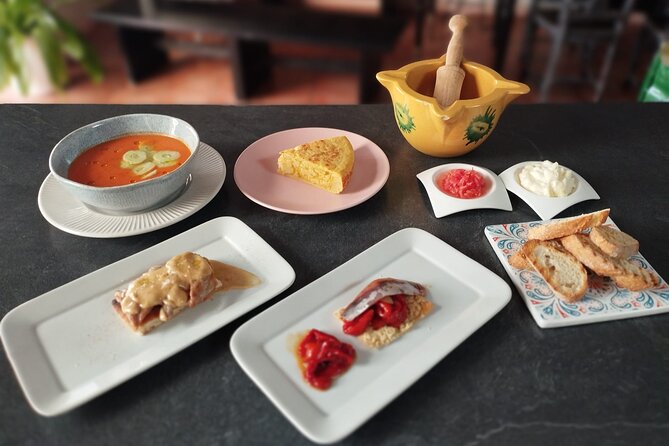
You’ll use fresh, seasonal ingredients that are sourced that morning from the Central Market. That’s not a trivia detail. It affects everything you taste—especially for items like gazpacho, where ripeness drives the flavor, or for desserts where dairy and texture matter.
The class also adds the “why” behind the dishes. You’ll hear stories about the menu—what the dish is, how it became familiar in Spain, and how it fits into daily eating culture. It turns tapas from random variety into a coherent flavor map.
For you, that means when you cook later, you’re not guessing. You understand what the dish is supposed to taste like and how it’s meant to feel on the plate.
The menu: what you’ll cook and why each item matters
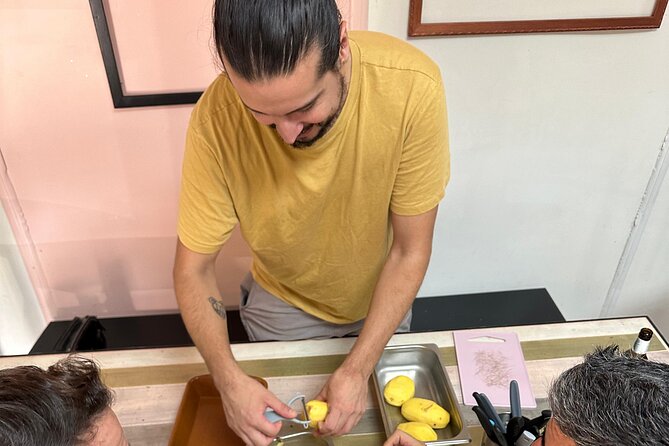
Your menu is built for variety: cold, hot, sweet, salty, and everything in between. Expect a mix of classic comfort and distinctive regional flavors.



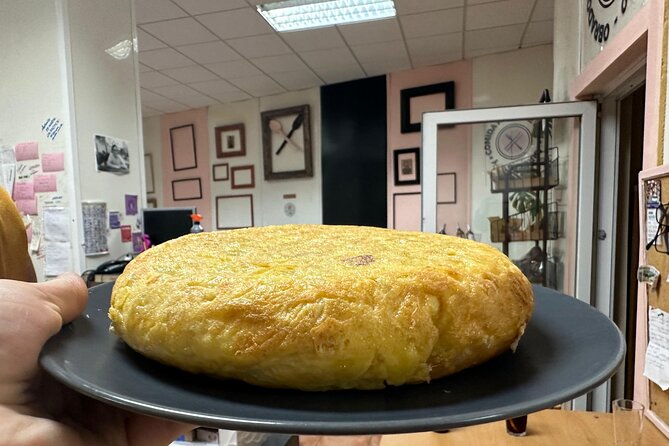
Tortilla de patatas (Spanish omelette)
This is one of Spain’s most recognizable dishes for a reason. You’ll make a golden, fluffy omelette with soft potatoes, eggs, and olive oil. The big lesson is control—how to get the potatoes tender without overcooking the eggs.
Gazpacho
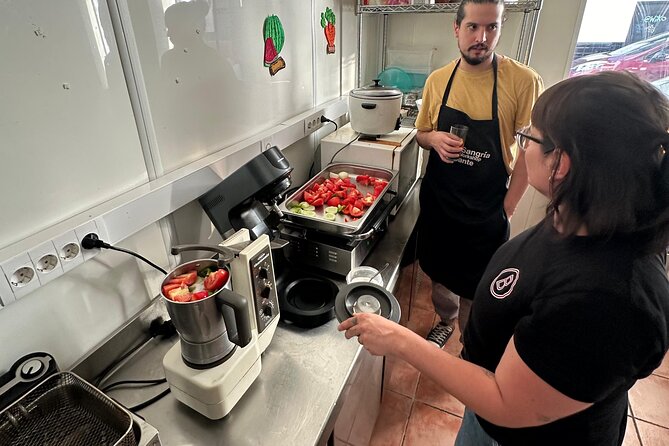
Gazpacho is the cool, refreshing counterpoint. You’ll prepare a cold Spanish soup made with ripe tomatoes, cucumbers, peppers, and olive oil. It’s a perfect dish for an evening in Alicante because it cools you off while you’re working.
Secreto toast with turrón sauce
Secreto is pork, and here it comes on a crispy toast with a creamy turrón sauce. If you’ve only ever thought of turrón as a holiday sweet, this is your reality check. It works as a savory partner too, adding caramel-nougat depth.
Delicias de Elche (dates wrapped in bacon)
These are sweet and savory bites: dates wrapped in crispy bacon. They’re small, but they’re a big flavor lesson. You learn how to balance sweet fruit and salty, smoky meat so it doesn’t feel heavy.
Chorizo a la sidra
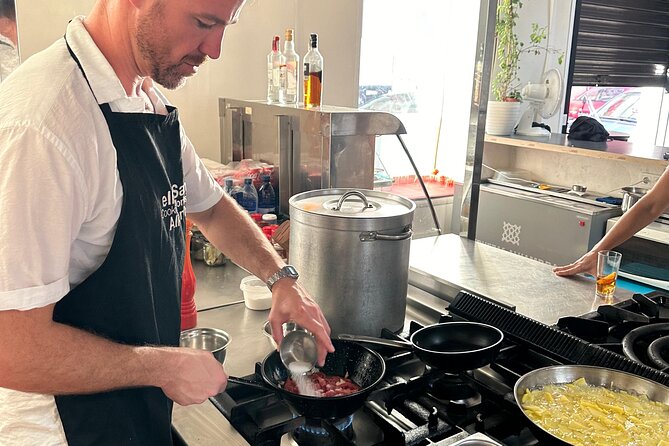
You’ll cook spicy chorizo simmered in cider. This is the bold, juicy element of the meal. The cider helps round the spice and adds a warm, fruity depth that you don’t get from chorizo alone.
Torrija with turrón ice cream (dessert)
You’ll finish with warm, caramelized brioche paired with turrón ice cream. Torrija is comfort food in Spain, often linked to seasonal eating and beloved for its custardy sweetness. Pairing it with nougat ice cream makes the dessert feel both classic and slightly surprising.
Eating the tapas you cooked (and why it feels more real)
After cooking, you’ll enjoy your tapas dinner together. This part is where the experience turns from activity into memory.
Sitting down to eat gives you time to notice textures and balance—how gazpacho cuts richness, how tortilla grounding pairs with spicy chorizo, and how sweet elements like dates and torrija don’t just end the meal, they actually connect it.
It’s also social in a natural way. With a group size capped at 16, conversations are easy to start, and you’re sharing the same menu. For families and friend groups, that matters because everyone can talk about what they made, what went right, and what they want to try again later.
And yes, you’ll still get the cultural close—live Spanish guitar—so the dinner doesn’t end abruptly. It glides into atmosphere.
Live Spanish guitar: a local finish that actually fits
The guitar part isn’t an add-on throwaway. It works because your brain has already shifted into the Spanish rhythm. You’ve cooked, eaten, and learned enough to understand the flavors. Then music makes the whole evening feel like a real Alicante night rather than a stop-and-go activity.
Think of it as the final garnish, not the main course. But it’s a strong one.
Price and value: is $42.01 a fair deal?
For $42.01 per person and about 2 hours 15 minutes, you’re paying for more than ingredients. You’re paying for:
- A guided, hands-on cooking experience in a working kitchen
- Fresh produce tied to a specific market sourcing approach
- A full tapas menu plus dessert
- English support through Frederico (Fred)
- Live Spanish guitar at the end
If you compare this to the cost of buying tapas one dish at a time—plus the experience of actually cooking them—the value becomes clear fast. It’s also a good deal because it’s not just one recipe. You’re learning a whole set of flavors and techniques in one evening.
One more value detail: the class is capped at 16. That size helps keep the instruction quality higher than a large group kitchen setup would.
Who this class suits best (and a fair note on trade-offs)
This is ideal if you:
- Want a practical cooking session instead of a food tasting only
- Like traditional Spanish flavors and want recipes you can repeat
- Enjoy learning the stories behind dishes, not just ingredients
- Prefer a smaller group evening with social energy
It also works well for families or groups of friends because the tasks can be split and the teaching stays friendly.
A consideration: in any small class, you might not handle every single step personally from start to finish. Some people do more hands-on work during one dish and less during another. That doesn’t spoil the evening, but if you need maximum action at all times, you should lean into the tasks as they come.
Also, if you’re very sensitive to language, know that the chef may speak primarily in Spanish while Frederico translates into English. The translation is part of the system, not a random detour.
Quick tips to make the evening easier
A few things to do before you go:
- Go hungry. You’ll cook and then eat a full tapas spread, ending with dessert.
- If you want a vegetarian option, request it ahead of time. Vegetarian options are available on request.
- Wear comfortable clothes. Kitchens get warm, and you’ll be standing and moving.
- Keep your questions ready. The cultural stories and dish history are a real part of the value here.
- If you’re a confident cook, tell the host you’d like to take on more active roles during prep.
Should you book this Alicante tapas cooking class?
I’d book it if you want a real Spanish cooking evening in a small group, with hands-on learning, a full menu, and a local guitar finish. The price is reasonable for the amount of food and instruction you get, and the structure fits a 6 pm start without dragging into a late-night marathon.
Skip it only if you’re looking for a passive tasting experience where you don’t want to touch ingredients or pans. This is a cooking class first, then dinner—music is the last piece of the night, not the main event.
If you want to bring Spain home as more than photos, this is a solid way to do it—one tortilla, one gazpacho, and one sweet turrón moment at a time.
FAQ
What time does the Alicante tapas cooking class start?
It starts at 6:00 pm. The experience runs about 2 hours 15 minutes.
Where is the meeting point?
You meet at C. Manuel Antón, 19, 03004 Alicante (Alacant), Alicante, Spain. The activity ends back at the meeting point.
How much does it cost?
The price is $42.01 per person.
What language is the class offered in?
The class is offered in English.
What’s on the menu?
The menu includes tortilla de patatas, gazpacho, dates wrapped in bacon, chorizo in cider, secreto toast with turrón sauce, and dessert (torrija with turrón ice cream).
Will the experience include live guitar music?
Yes. Live Spanish guitar music is included at the end of the experience.
How big is the group?
The class has a maximum of 16 travelers.
Are vegetarian options available?
Yes. Vegetarian options are available under request.
What if I need to cancel?
You can cancel for a full refund if you cancel at least 24 hours before the experience starts. Changes made less than 24 hours before the start can’t be accepted, and cancellations inside that window aren’t refunded.