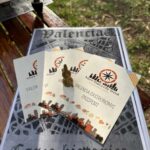
Valencia hides stories under your feet. This Magical Valencia walk strings together the city’s biggest eras in order, with stops that range from underground Roman remains to the Cathedral’s Holy Grail legend. I especially like the walk above the ruins at Plaça de l’Almoina, and I love that the tour stops for two proper tapas along the way. One thing to keep in mind: drinks aren’t included, so you’ll want to plan a little extra if you want wine, beer, or sangria.
The tour also leans into a small-group feel (up to 10 people), and that matters when you’re threading through tight old-town streets. You’ll get an expert guide in English, and you’ll be on your feet for about 2 hours 15 minutes, so comfortable shoes are a smart move. Also note that the experience requires good weather, so if skies turn ugly, you may be offered a different date or a full refund.
In This Review
- Key highlights you’ll feel (fast)
- A 2-hour 15-minute route that actually makes sense
- Plaça de la Mare de Déu: the forum roots behind the big landmarks
- Plaça de l’Almoina: walking above Roman, Visigothic, Islamic, and Christian remains
- Valencia Cathedral and the Holy Grail legend you’ll understand
- Iglesia de San Juan del Hospital: Valencia’s oldest Christian temple
- Mascletà Plaza del Ayuntamiento: Fallas tradition in a civic setting
- Plaza Redonda tapas: two dishes and a smart mid-tour break
- La Lonja de la Seda / Market area: how trade and food shape the city
- House of Cats and Plaça del Carme: cat legends, art, and an air-raid shelter
- Torres de Serranos: Gothic gate, noble prison, and wartime protection
- Guide Juan: why the storytelling makes the short tour feel longer
- Price check: does $41.39 feel fair?
- Who should book this Valencia mystery and tapas adventure
- A quick look at logistics that matter
- Should you book this Magical Valencia tour?
- FAQ
- How much does this tour cost?
- How long is the experience?
- Is the tour offered in English?
- Is a mobile ticket used?
- Are the tapas included?
- Are admission tickets included for every stop?
- What is the group size limit?
- Where does the tour start and end?
- Is it suitable for most travelers?
Key highlights you’ll feel (fast)
- Plaça de l’Almoina’s glass-panel route lets you literally walk above Roman, Visigothic, Islamic, and Christian remains
- Valencia Cathedral’s layered past is explained as Roman → Visigothic → mosque → cathedral, with the Holy Grail story in context
- Two tapas during the Plaza Redonda pause gives you a real taste of Valencia without blowing the schedule
- Fallas-era energy at Mascletà Plaza ties today’s traditions to the same civic spaces you’re seeing elsewhere
- Torres de Serranos in wartime: how this Gothic gate helped protect important works during the Spanish Civil War
- Small group size (max 10) keeps questions possible and the pacing comfortable
A 2-hour 15-minute route that actually makes sense
This tour works because it doesn’t feel like random sightseeing. You move through central Ciutat Vella stops in a way that helps your brain build a timeline: old forum areas, layers underfoot, then major churches, then civic squares, then markets and art, and finally the Serranos gate with its wartime role. It’s the kind of structure that helps you notice details you’d otherwise miss.
The pacing is built for a short window. You’re given brief stops (often around 10 to 20 minutes), which is good if you want highlights without getting stuck reading every plaque for hours. It also means you’re not forced to choose between history and food. The tapas break lands in the middle of the walk, which is exactly when your energy usually starts to fade.
You can also read our reviews of more tours and experiences in Valencia.


Plaça de la Mare de Déu: the forum roots behind the big landmarks
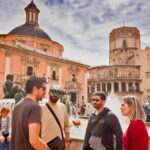
You start at Plaça de la Mare de Déu in Ciutat Vella. This is the neighborhood where ancient Valencia’s forum once sat, and the guide frames it as a “now you’re standing on layers” moment. You’re surrounded by major buildings, including the Cathedral area, the Basilica of Our Lady of the Forsaken, and the Palau de la Generalitat.
What I like here is how the tour sets expectations early. Instead of treating each stop like an isolated postcard, you get a sense that Valencia keeps rebuilding on top of itself. This is also the one place where admission isn’t included, so if a guided entry at that first stop is part of what you want, check what’s required before you arrive.
Plaça de l’Almoina: walking above Roman, Visigothic, Islamic, and Christian remains
Stop two is Plaça de l’Almoina, and this is the moment you’re likely to remember. The underground museum uses glass panels so you can walk above the archaeological remains. The site is presented as a stack of eras: Roman, Visigothic, Islamic, and Christian.
Seeing remains at eye level changes everything. It’s one thing to read about a city that changed hands. It’s another to understand that the street-level Valencia you’re standing in sits directly over earlier Valencia. If you like historical explanations with physical anchors, this stop is worth the price all by itself.
One practical note: underground spaces can feel cooler and darker than the open air. If you tend to get cold easily, bringing a light layer helps.
Valencia Cathedral and the Holy Grail legend you’ll understand
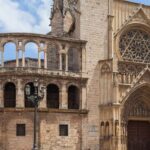
Next comes Valencia Cathedral, where the tour brings up a story many people associate with the site: the Holy Grail, believed by many to be the authentic chalice. The guide also explains why this cathedral is so historically “stacked.” The building is described as being built on layers of earlier structures: a Roman temple, then a Visigothic church, then a mosque, and finally the cathedral.
That chain matters. It’s not just trivia. It helps you see why the architecture and the sacred significance feel both European and layered with multiple cultures. You also get free admission here, so you’re not juggling extra tickets while trying to take in the scale.
If your goal is to leave Valencia with more than one memory, this stop delivers. It gives you a big landmark and a narrative that ties it to the city’s longer timeline.
Iglesia de San Juan del Hospital: Valencia’s oldest Christian temple
Stop four is Iglesia de San Juan del Hospital, described as the oldest Christian temple in Valencia. The tour calls out the style mix: a blend of Romanesque and Gothic.
This is a good break from “big building, big crowd” energy. The guide’s framing makes the structure easier to read. When you hear what you’re looking for—how styles overlap and why they matter—you start spotting transitions you would otherwise gloss over.
Free admission means you can spend time inside without thinking about the cost. The only downside is simple: it’s a relatively quick stop (about 15 minutes), so keep your eyes open and don’t get stuck taking in one corner longer than the schedule allows.





Mascletà Plaza del Ayuntamiento: Fallas tradition in a civic setting
At Mascletà Plaza del Ayuntamiento, the tour connects a modern Valencian tradition to the civic center you’re seeing around City Hall. This square is tied to the famous mascletàs fireworks during Fallas, and the guide helps you understand why this public space matters.
Even if you’re not visiting during Fallas season, it helps to hear how these civic landmarks are reused across the year. You’ll also get sightlines to the City Hall, the Central Post Office, and the Ateneo Mercant.
This stop is short (about 10 minutes), but it’s a useful reset point. It shifts your focus from temples and ruins to modern public life.
Plaza Redonda tapas: two dishes and a smart mid-tour break
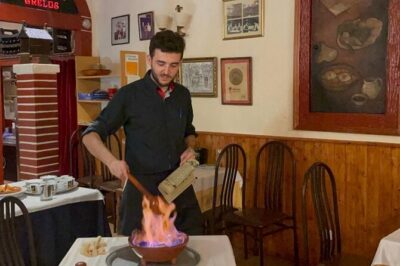
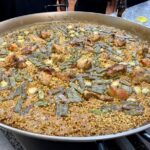
Then you reach Plaza Redonda, where the tour pauses for two authentic tapas. The location is described as having served as a meat and fish market in the past, and today it’s a lively hub of artisan shops.
This part is included, and it’s one of the strongest value pieces of the whole experience. The guide handles the flow so you don’t waste time hunting for what to order. You get a taste of Valencian food without turning the tour into a food tour that runs late.
Also, because drinks aren’t included, you’ll likely want to decide in advance whether you’ll add something beyond the tapas itself. If you’re trying to keep costs down, you can stick to water and let the tapas do the work.
La Lonja de la Seda / Market area: how trade and food shape the city
Stop seven is La Lonja de la Seda, presented here alongside the Central Market (1928) and its role as one of Europe’s largest fresh produce markets. The tour uses this area to point out the city’s food and trade rhythm—Valencia as a place where markets and movement have long mattered.
Even if you’re not a shopper, this stop helps you understand Valencia’s “real life” side. It’s not only monuments. It’s systems: commerce, supply, and the daily flow of goods. If you like context, this is where your history lessons start connecting to why the city looks the way it does today.
House of Cats and Plaça del Carme: cat legends, art, and an air-raid shelter
Stop eight is the House of Cats, a whimsical piece of urban art dedicated to Valencia’s feline legends. It’s a fun tonal shift after churches and gates. You get to stop, smile, and reset your senses for the final stretch.
Then you head to Plaça del Carme, described as the heart of the Carmen district. The guide also points out that beneath this square lies a Civil War air-raid shelter. You’ll see a statue of painter Joan de Joanes, which ties art and identity to a spot that also carried survival and protection during wartime.
This mix is what makes the tour feel “real.” Valencia isn’t only romantic stonework. It’s also a city that adapted to conflict. The stop is short (about 10 minutes), but it lands.
Torres de Serranos: Gothic gate, noble prison, and wartime protection
The final stop is Torres de Serranos, a monumental Gothic gate built between 1392 and 1398. The tour explains its history as more than architecture: it was used as a prison for nobles, and during the Spanish Civil War it’s said to have protected important artworks.
That’s a powerful way to end. You start the tour in a forum neighborhood and end at a gate designed to control movement and guard power. In between, you’ve seen religion, civic life, markets, and street art. The last image is a structure that handled both authority and emergency.
You’ll get about 10 minutes here, which is enough for orientation and key details. If you love gates and fortifications, you might want to linger after the tour ends, because this is the kind of place where your eyes keep finding new features.
Guide Juan: why the storytelling makes the short tour feel longer
The experience is led by an expert guide, and the name you’ll hear from many past participants is Juan. His English is highlighted as excellent, and that’s a big deal on a history-forward walk like this. Clear explanations keep the timeline tight, and they help you connect stops without feeling lost.
What stands out from the way this tour is described is not just facts, but pacing and patience. A good guide doesn’t rush you past details you care about. Instead, you get short, well-timed context: why this square matters, how this building changed through time, and what you should notice in the architecture.
Juan also reportedly gives good advice on where to eat and drink after. Even if you’re already planning your own dinner, those suggestions can save time and help you avoid the tourist traps.
Price check: does $41.39 feel fair?
At $41.39 per person, this is priced as a short, guided old-town experience with two tapas included. That’s the key value equation: you’re paying for an expert narrative walk plus food, not just access to monuments.
Most stops are free to visit, which means the tour cost isn’t mostly covering entry fees. The one exception is the first stop, where an admission ticket isn’t included. So your total cost could be slightly higher if you choose to add whatever entry is required there.
Drinks aren’t included either, so if you want a glass of wine with tapas, expect to pay extra. For me, the trade-off is still good. You’re getting guidance and a food moment built into the route, instead of scrambling on your own.
Group size (max 10) also supports the value. Smaller groups usually mean less time waiting and more time hearing answers.
Who should book this Valencia mystery and tapas adventure
This tour is a strong match if you want:
- A history storyline across Roman, medieval, Islamic-era layers, and beyond
- A manageable old-town walk that won’t eat your whole day
- Two tapas included, without needing to research where to start
- English guidance that keeps the route coherent
It’s also a good fit for couples, friends, and solo travelers who like structure. If you’re bringing kids, it can work well because the stops have variety: ruins under glass, dramatic cathedral legend, cat art, and street-level pauses.
A quick look at logistics that matter
You’ll use a mobile ticket, and the tour is offered in English. It runs about 2 hours 15 minutes, with a maximum of 10 travelers. The meeting point is Plaça de la Mare de Déu in Ciutat Vella, and the tour ends at Torres de Serranos near C. de la Blanqueria, 1.
It’s near public transportation, and service animals are allowed. The tour also requires good weather, so if rain shows up, plan for an adjusted date.
Should you book this Magical Valencia tour?
Yes, if you want a guided walk that connects landmarks into a timeline and you like the idea of eating mid-route. The two tapas stop is one of the best value elements, and the underground museum at Plaça de l’Almoina is the kind of experience you can’t easily replicate by wandering on your own.
Skip it only if you strongly prefer to travel without guided structure, or if you’re hoping for a lot of extra time at each site beyond the short stops. This tour is designed for motion and clarity, not long unhurried museum days.
If you like your Valencia mix equal parts story and flavor, this one is an easy yes.
FAQ
How much does this tour cost?
The price is $41.39 per person.
How long is the experience?
It lasts about 2 hours 15 minutes.
Is the tour offered in English?
Yes, the tour is offered in English.
Is a mobile ticket used?
Yes, you’ll receive a mobile ticket.
Are the tapas included?
Yes, the experience includes two traditional tapas dishes. Drinks are not included.
Are admission tickets included for every stop?
Not all stops. The first stop notes an admission ticket is not included, while other stops are listed as free.
What is the group size limit?
The maximum group size is 10 travelers.
Where does the tour start and end?
It starts at Plaça de la Mare de Déu, Ciutat Vella, València and ends at Torres de Serranos (C. de la Blanqueria, 1, Ciutat Vella).
Is it suitable for most travelers?
Most travelers can participate, and service animals are allowed.