REVIEW · VALENCIA
Valencia: Mysteries, Legends, & Local Tapas Experience
Book on GetYourGuide →Operated by MYSTICXPERIENCE · Bookable on GetYourGuide
Valencia runs on water stories and tapas. I love how this walk hits the UNESCO Water Tribunal at Plaza de la Virgen and then slows down for a relaxed two-tapas break in a charming square. You get history you can see with your own eyes, plus the kind of street-level legends that make the city feel personal fast.
One thing to plan for: it’s real walking, and the tour doesn’t include drinks beyond what’s paired with the tapas, so you’ll want comfortable shoes and some extra cash if you want an extra sip.
In This Review
- Quick hits before you start
- Warming up in the old center: your route starts around Marian Square energy
- Plaza de la Virgen and the UNESCO Water Tribunal: the city’s living rulebook
- Walking above ancient Valencia at Plaza de la Almoina
- Valencia Cathedral and Plaza de la Reina: layers you can trace with your eyes
- Miguelete tower (207 steps): a viewpoint that makes the whole walk click
- San Juan del Hospital Church: the old-Christian thread in the maze
- Plaza del Ayuntamiento and Fallas: fireworks, tradition, and civic power
- Plaza Redonda tapas tasting: circular square, old market past
- La Lonja de la Seda and the Central Market trade story: stone, water, and commerce
- House of Cats and Carmen district legends: the city smiles in public
- Torres de Serranos: Gothic gate history, Civil War protection, and views
- Price and value: $34 for 2.5 hours, tapas included, and a guide who connects the dots
- Who this tour suits best (and who should reconsider)
- Should you book this Valencia mysteries and tapas walking tour?
- FAQ
- FAQ
- How long is the Valencia walking tour?
- What’s included in the price?
- Are drinks included with the tapas?
- Where does the tour start and where does it end?
- What languages is the live guide available in?
- Is the tour wheelchair accessible?
- What should I bring?
- Is alcohol allowed during the tour?
- How does payment work?
Quick hits before you start
- UNESCO Water Tribunal at Plaza de la Virgen on Thursdays, right beside the Cathedral area
- Plaza de la Almoina underground museum with glass panels over Roman to Christian layers
- Miguelete tower views from a 207-step climb
- Plaza Redonda tapas stop in a circular square that used to be a meat and fish market
- La Lonja de la Seda UNESCO site and its stone palm grove hall
- Torres de Serranos finale with Gothic gate history and panoramic Turia views
Warming up in the old center: your route starts around Marian Square energy
The tour kicks off near Plaça de la Mare de Déu, then you spend the first stretch getting your bearings. This is the part where the guide sets the map in your head: Valencia didn’t grow only as a city of monuments—it grew as a city of water control, trade, and smart reuse of spaces that had already been built on.
Expect a steady walking pace and frequent “look up” moments. This works well if you’re the type who likes to understand what you’re seeing, not just snap photos and move on. With a small group, you don’t feel like you’re shouting your way through crowds.
If you’re visiting in warm months, start hydrating early. The route links major squares and viewpoints, so you’ll be exposed to sun at times. Sunscreen is a smart call.
You can also read our reviews of more tours and experiences in Valencia.


Plaza de la Virgen and the UNESCO Water Tribunal: the city’s living rulebook
You begin at Plaza de la Virgen, a place with heavyweight neighbors: the Cathedral complex, the Basilica of Our Lady of the Forsaken, and the Palau de la Generalitat. It’s one of those squares where you feel the city layers stacking up—politics, religion, and everyday life all in the same frame.
The standout moment here is the UNESCO-recognized Water Tribunal, which holds sessions every Thursday. Even if you don’t catch a specific session during your dates, the guide’s explanation makes it feel less like trivia and more like a local system Valencia relies on. It’s also a great anchor point for understanding why the rest of the tour keeps returning to water and the practical brain behind the art.
I like this start because it gives meaning before you start collecting landmarks. You’re not just walking from postcard to postcard; you’re learning the logic behind the city.
Walking above ancient Valencia at Plaza de la Almoina
Next comes Plaza de la Almoina, Valencia’s underground museum. Glass panels let you literally step over remains from multiple eras—Roman, Visigothic, Islamic, and Christian.
This stop is valuable because it turns “old city” into something measurable. You can see how centuries didn’t replace each other in one clean cut. Instead, structures accumulated, shifted, and got repurposed. The guide helps you connect the layers to what you’ll see above ground right afterward.
Practical tip: the underground museum area can feel cooler than the open street, but you’re still outside at the edges. Wear shoes you trust for tight paths and slow steps over uneven sections.
Valencia Cathedral and Plaza de la Reina: layers you can trace with your eyes
From the underground layers, you move up to one of the big ideas of Valencia Cathedral and Plaza de la Reina. The Cathedral’s location is built on older layers: Roman temple, Visigothic church, mosque, and then the cathedral. That list matters, because it explains why the site feels both ancient and stubbornly important.
Plaza de la Reina is also key for orientation. It sits at the city center, and Roman ruins are beneath the surface. So even before you climb anything, you’re already standing near the physical roots of the place.
One of the most talked-about stories you’ll hear here is about the Holy Grail: the chalice is believed by many to be the authentic one associated with the legend. Even if you’re not trying to solve the Grail debate, the way Valencia holds onto the story tells you something about how locals relate to faith, relics, and identity.
Miguelete tower (207 steps): a viewpoint that makes the whole walk click
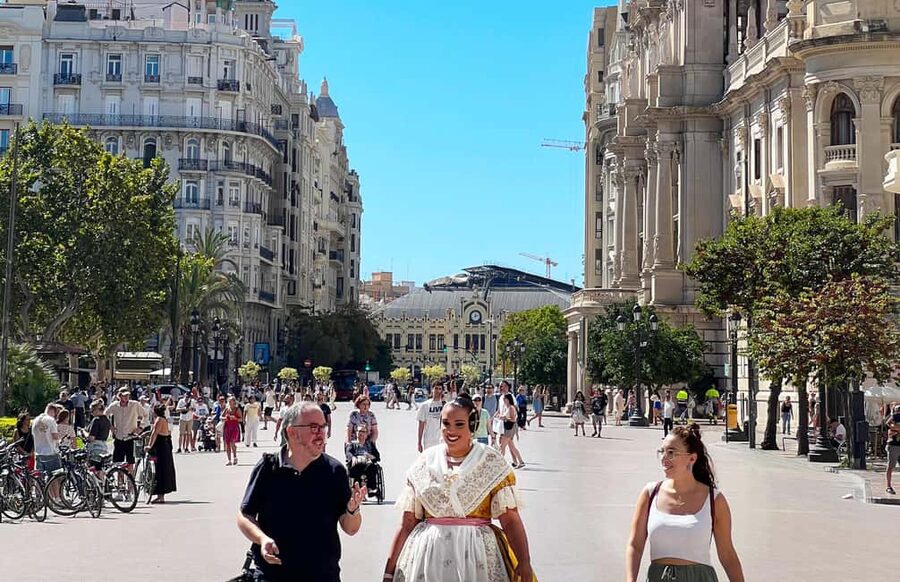
Then it’s time for the Miguelete tower climb—207 steps. Yes, it’s stairs. But it’s the kind you’ll appreciate because the views connect the dots you’ve been learning.
From the top, you get panoramic views over Valencia and toward the Turia riverbed. That’s not just a nice photo: it helps you understand how the city’s geography shapes its story. Streets, squares, and water systems stop feeling random.
If you’re someone who hates stairs, consider taking your time and pacing yourself on the ascent. The upside is you earn a top-floor perspective without needing a long day trip.





San Juan del Hospital Church: the old-Christian thread in the maze
A quieter but meaningful stop is San Juan del Hospital Church. It’s described as the oldest Christian temple in Valencia, and it’s known for a rare mix of Romanesque and Gothic styles.
This church helps balance the tour. After towers, cathedral-level legends, and major civic squares, the church feels more human-scale—less about big power and more about long continuity. It’s also a good moment to slow down, absorb, and reset your eyes before you hit the louder plaza areas.
If you like architecture details, pay attention to how the styles blend rather than clash. That’s the kind of thing a good guide points out without making it feel like a lecture.
Plaza del Ayuntamiento and Fallas: fireworks, tradition, and civic power
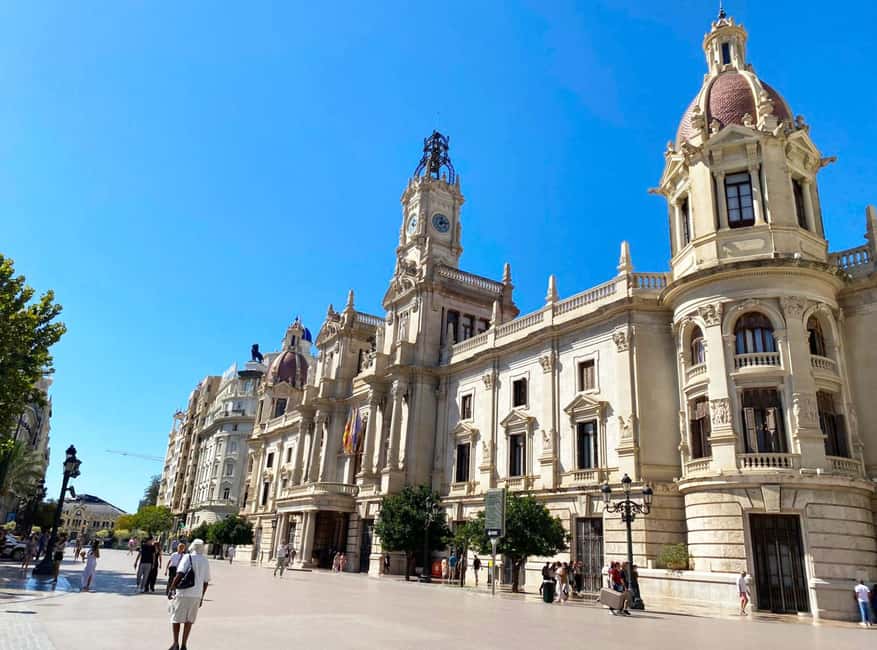
Plaza del Ayuntamiento is where Valencia’s civic identity shows up loudly. The square used to be home to a Franciscan convent, and today it’s where the famous mascletàs fireworks roar during Fallas.
Even if Fallas itself isn’t happening on your dates, the connection matters. It explains why certain buildings and squares feel designed for big public moments. Then you’ll spot the grand City Hall, the Central Post Office, and the Ateneo Mercantil nearby—each one reinforcing the sense of Valencia as a place that organizes life around public space.
This is also a nice mid-tour breath before food. Your guide keeps the pacing smart here so you don’t feel rushed on the run into the tapas stop.
Plaza Redonda tapas tasting: circular square, old market past
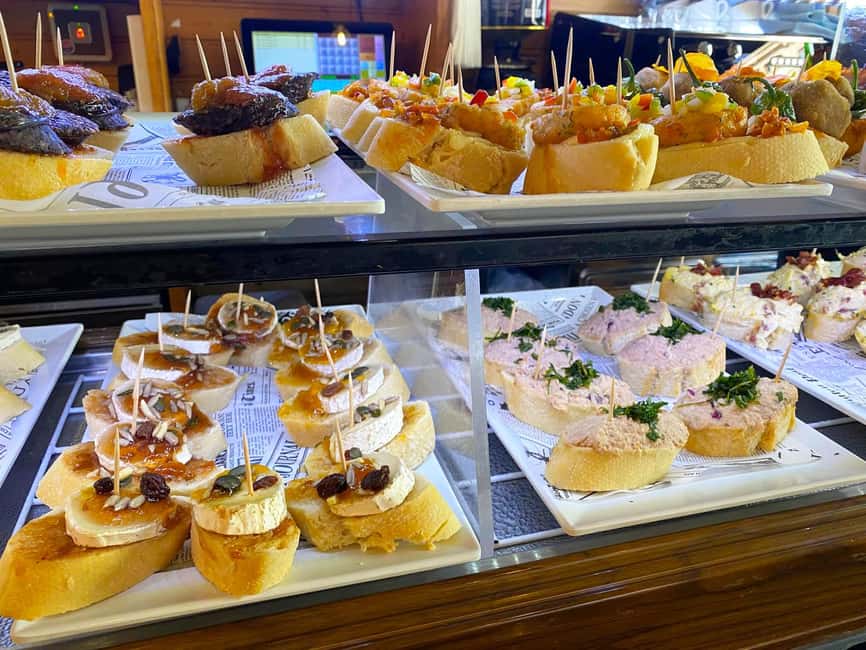
Food arrives at Plaza Redonda, a perfect circular square built in 1840. It once served as a meat and fish market, and now it’s a lively hub of artisan shops—another example of Valencia reusing the same “center of gravity” for new needs.
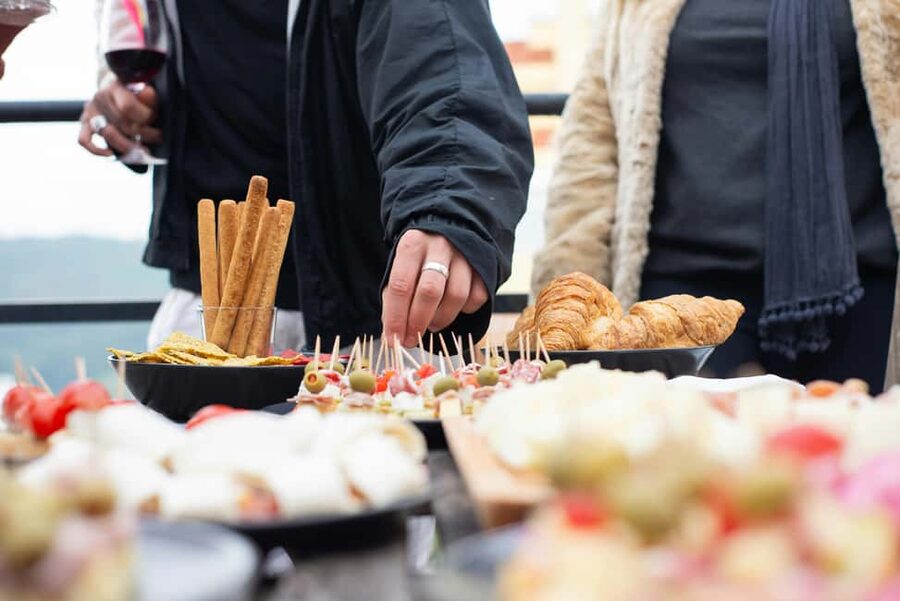
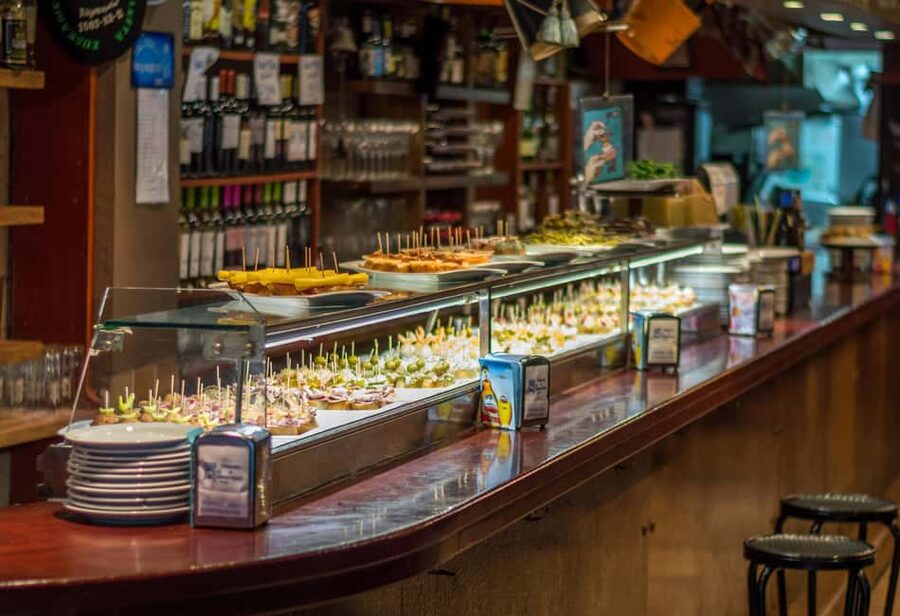
You’ll get two tapas included. The exact offerings can vary, but you can count on them being in a local spot, not a tourist-only menu. Drinks aren’t included, though your guide will often suggest local options—orange wine is one example you might be steered toward.
This tapas stop is one of the best parts because it doesn’t feel like a rushed add-on. It’s paced like a real pause, with enough time to eat and reset your energy for the rest of the walk.
La Lonja de la Seda and the Central Market trade story: stone, water, and commerce
Next you’ll head to La Lonja de la Seda, the Silk Exchange, a UNESCO World Heritage Site. It’s a Gothic masterpiece, and the hall is often described as a stone palm grove—those columns create that forest-like effect in a building made for business.
Right across from it is the Central Market, dating to 1928 and known as one of Europe’s largest fresh produce markets. Facing each other, these two landmarks tell a clean story: food and trade on one side, formal commerce on the other.
This part of the tour is strong if you care about how a city actually functions. You see that Valencia’s identity isn’t only art and religion. It’s also how people moved goods, managed systems, and fed themselves—day after day, century after century.
House of Cats and Carmen district legends: the city smiles in public
After the big civic and commercial sites, you get a more playful Valencia stop: the House of Cats. It’s a whimsical urban art piece tied to a feline legend about four cats that survived after the Cid’s conquest in 1094.
This is the kind of storytelling detail I enjoy because it makes the street feel alive. It’s not just decorative. It’s a local memory made visible on a wall.
Then you head to Plaza del Carmen, in the heart of the Carmen district, beside the church and the Palace of Pineda. The most sobering detail here is underneath: a Civil War air-raid shelter. Add a statue of painter Joan de Joanes nearby, and you get a square that holds both creativity and hardship in the same small footprint.
Torres de Serranos: Gothic gate history, Civil War protection, and views
The tour ends at Torres de Serranos, a monumental Gothic gate built between 1392 and 1398. It once served as a prison for nobles, which gives the structure a tense, controlled feeling compared with all the open-sky squares you’ve visited.
During the Spanish Civil War, it’s also noted for protecting Prado Museum masterpieces. That detail can hit hard: a city landmark built for power ends up serving as a safeguard for art.
You’ll also have the chance to climb for panoramic views of Valencia and the Turia riverbed—closing the loop from the Miguelete tower views earlier. The final climb is a good “wrap it up” moment because you leave with a mental map.
Price and value: $34 for 2.5 hours, tapas included, and a guide who connects the dots
At $34 per person for a 2.5-hour walking tour, the value comes from two places. First, you get a live guide for a focused route with more than 10 major stops built into it. Second, you get two tapas included in the middle of the walk, so you’re not stuck paying for every pause.
Drinks aren’t included, so if you want something beyond water, plan for that. But even with that, the tour is priced like a food-and-culture highlight, not a full-day museum pass.
If you’re planning to do other independent sightseeing afterward, this tour is a strong “start the trip smarter” move. It helps you understand which places are connected and why they matter, so your rest of your time in Valencia feels less like hopping between unrelated sights.
If you prefer long museum stays, quiet cathedral time, or zero stairs, you might find it a bit structured. The upside is that it stays concentrated—you don’t need a whole day to get the big signals.
Who this tour suits best (and who should reconsider)
This is a great match for first-time visitors who want real context fast. It’s also ideal if you like architecture, city legends, and food stops that feel local rather than pre-packaged.
You’ll probably enjoy it most if:
- You’re comfortable walking for 2.5 hours
- You don’t mind stair climbs (Miguelete tower, plus Torres de Serranos access)
- You want your Valencia to include both the serious UNESCO side and the playful House of Cats side
You might reconsider if you:
- Have limited mobility or need a very low-step route (even though the tour is listed as wheelchair accessible, your comfort matters)
- Want extended sit-down meals and long indoor museum time instead of short guided stops
Should you book this Valencia mysteries and tapas walking tour?
If you want Valencia to feel like a story—water, trade, faith, war, and street legend all woven through real places—this tour is a smart pick. The UNESCO Water Tribunal framing, the underground remains at Plaza de la Almoina, the Cathedral layers, and the ending at Torres de Serranos give you a clean arc.
I’d book it if you’re the type who enjoys understanding what you’re looking at while you walk. Skip it only if you’d rather do long museum hours on your own or you’re not up for stairs.
FAQ
FAQ
How long is the Valencia walking tour?
It lasts about 2.5 hours.
What’s included in the price?
You get a live tour guide and two tapas in a local Spanish spot.
Are drinks included with the tapas?
No. Drinks are not included, but your guide may suggest local options like orange wine.
Where does the tour start and where does it end?
It starts at Plaça de la Mare de Déu and finishes at Torres de Serranos.
What languages is the live guide available in?
The tour is offered with guides speaking Italian, English, and Spanish.
Is the tour wheelchair accessible?
Yes, the activity is listed as wheelchair accessible.
What should I bring?
Bring comfortable shoes, a camera, sunscreen, and water.
Is alcohol allowed during the tour?
No, alcohol and drugs are not allowed.
How does payment work?
You can reserve now and pay later (you pay nothing today).