REVIEW · BARCELONA
Barcelona in One Day: Gaudí, Gothic Quarter &Tapas (Private Tour)
Book on Viator →Operated by Icono Spain Tours · Bookable on Viator
Gaudí and Gothic in just five hours. This private day strings together the Roman traces of Barcino, the best Gothic stops in the old center, and two of Gaudí’s signature home designs, then ends at Sagrada Família after the worst of the crowd crush. I love the crowd-smart timing at Sagrada Família, and I also love the private pace—my group can linger where details matter without feeling whipped onward.
One thing to plan for: this is a packed route with lots of walking and many quick look-ins, so if you need a slower rhythm, you’ll want to tell your guide early. Expect a true “see a lot” day, not a relaxed afternoon.
In This Review
- Key highlights worth planning for
- One Day in Barcelona: How This Route Actually Helps
- What you should know before you go
- Plaça Nova: The Roman Wall Clue You’ll Want on Your Map
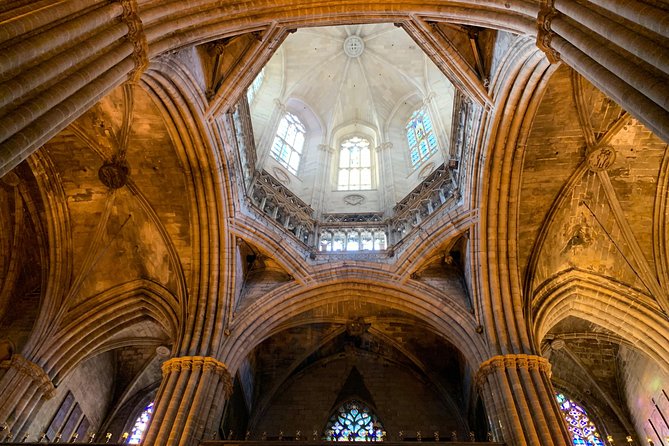
- Catedral de Barcelona: Gothic Interiors Without the Detour
- Casa de l’Ardiaca: A Medieval-Era Building With Romeo-and-Juliet Energy
- Plaça del Rei and Plaça Sant Jaume: Where Medieval Power Felt Local
- Conjunt Monumental de la Plaça del Rei
- Plaça de Sant Jaume
- Sinagoga Major de Barcelona: One of Europe’s Oldest Synagogues
- La Rambla: The Walk That Shows How the City Moves
- Mercat de la Boqueria: Food Culture in Motion
- Casa Batlló: Gaudí’s Bones and the Art of No Straight Lines
- La Pedrera (Casa Milà): When Stone Looks Like It’s Breathing
- Tapas and Breaks: Food as Part of the Itinerary, Not an Afterthought
- Sagrada Família at 4 pm: A Calm Ending You’ll Remember
- Price and Value: What You Pay for in This Private Format
- Who This Tour Fits Best (and Who Might Feel Cramped)
- Should You Book This Private One-Day Barcelona Tour?
- FAQ
- How long is the Barcelona in One Day tour?
- Is this tour private or shared with strangers?
- What language is the tour offered in?
- Is admission included for all the stops?
- What’s included for the Sagrada Família visit?
- What time does the Sagrada Família portion start?
- Where does the tour start?
- Does the tour run in any weather?
- Can I cancel for a full refund?
Key highlights worth planning for
- Sagrada Família at a calmer time of day: you visit in the late afternoon when visitor flow typically drops
- Roman-to-modern storytelling in the Gothic Quarter: start at Plaça Nova and keep moving through centuries of Barcelona
- Gaudí home stops that fit a limited schedule: Casa Batlló and La Pedrera are both included as quick, guided highlights
- Jewish Quarter focus with the Sinagoga Major: one of Europe’s oldest synagogues is part of the route
- La Rambla + Mercat de la Boqueria as your food-and-people-watching break: watch Barcelona live while you stroll
- Tapas with local flavors: the day is built to include food breaks, not just monuments
One Day in Barcelona: How This Route Actually Helps
If it’s your first trip and you’ve got limited time, this kind of tour can be a lifesaver. You’re not just ticking off famous names—you’re walking a line through the city’s layers: Roman Barcelona, medieval power, Jewish history, Modernisme architecture, and finally Gaudí’s most famous work.
The big win is how the day is timed. You get a carefully paced walk through the old center and then land at Sagrada Família in the late afternoon, when you’re more likely to breathe. I also like that the day includes breaks for restrooms and refreshments—small thing, big difference when you’re covering a lot ground.
And yes, it includes the food side. Multiple guide-led versions of this experience have ended with tapas and added Barcelona favorites along the route. It’s not just a history sprint with a snack at the end.
You can also read our reviews of more tours and experiences in Barcelona.



What you should know before you go
- It’s about 5 hours total, so the stops are short and focused.
- You’ll walk plenty—one group reported around 12,000 steps in about five hours.
- Some interiors are included in the visit time, but not every attraction ticket is included, so budget for a couple of paid entries.
Plaça Nova: The Roman Wall Clue You’ll Want on Your Map
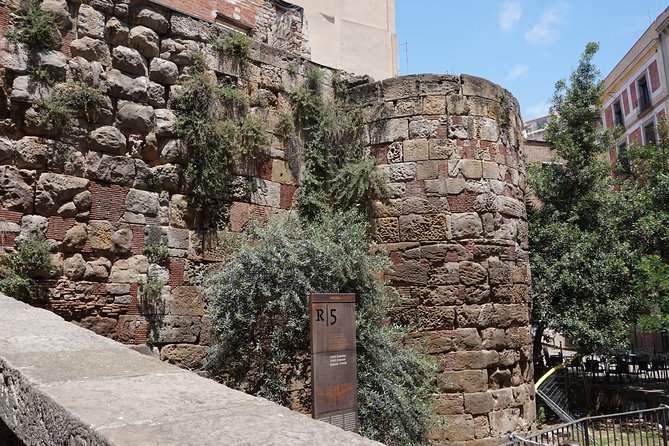
You start at Plaça Nova in the Gothic Quarter, right by the area where the old Roman city wall once ran. The fun detail is the art: seven giant letters that spell Barcino, the Roman name for Barcelona. The letters come from Joan Brossa’s alphabet work—six bronze pieces and one aluminum one—bolted to the ground so they’re meant to be seen up close, not just photographed from afar.
This stop is only about 10 minutes, but it sets the theme for the whole day. You’ll feel less like you’re hopping between random attractions and more like you’re following one story in different eras.
If you’re the kind of traveler who likes to understand what you’re looking at, this is a smart opener. If you’re in pure “I want the big buildings” mode, you might wish it lasted longer—but as a kickoff, it’s excellent.
Catedral de Barcelona: Gothic Interiors Without the Detour
Next comes Catedral de Barcelona. This is one of those places where a short stop still matters, because the interior experience is where the Gothic architecture hits hardest: a striking nave, chapels with intricate detail, and a quieter cloister with a fountain.
Your time here is about 10 minutes, which means you’re not doing a full slow-cinema visit. You’ll be there for the cathedral’s most important spaces and the guide’s key context. The interior is part of the experience, but admission isn’t included, so you’ll want to plan to pay separately if you’re entering.
Practical note: even if you only spend the short time on this stop, the cathedral gives you contrast. It helps you later appreciate how Gaudí’s style breaks rules in a very different way.
Casa de l’Ardiaca: A Medieval-Era Building With Romeo-and-Juliet Energy
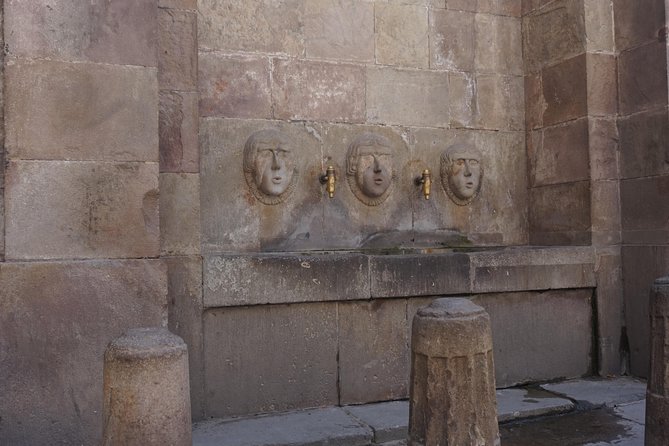
Casa de l’Ardiaca is a quieter, less-famous stop that feels very “old Barcelona.” This residence served the ecclesiastical hierarchy from the 12th century onward, but it’s not frozen in time. Over the centuries it was altered—especially in the early 16th century, when the building got connected sections and more Renaissance-style decoration.
What I like for first-timers is the mix of styles: flamboyant Gothic energy under older layers of change. There’s also an upper terrace and a balcony described as Romeo and Juliet style, which is a fun visual payoff after the big cathedral moment.
This stop is also about 10 minutes and admission is free. If you like architecture details that aren’t on everyone’s top-5 list, you’ll probably enjoy this one the most.





Plaça del Rei and Plaça Sant Jaume: Where Medieval Power Felt Local
Two squares, two types of importance.
Conjunt Monumental de la Plaça del Rei
At Plaça del Rei, you get a medieval feel that’s hard to fake. The square is enclosed by buildings including the Palau Reial Major and related structures. It’s peaceful and harmonious, and it reads like a snapshot of Barcelona’s royal past.
Your stop here is about 10 minutes, and it’s free. The drawback? It’s short. You’ll see the big medieval composition, but you won’t get a long “sit and soak it in” moment.
Plaça de Sant Jaume
Then it’s Plaça Sant Jaume, one of the Gothic Quarter’s key political centers. This is where the city’s civic and national Catalan government buildings sit today—City Hall and the Palau de la Generalitat.
It’s about 10 minutes and free, and your best use of that time is to look up and notice how a city square can feel like a room—especially in historic neighborhoods where the buildings shape the air around you.
Sinagoga Major de Barcelona: One of Europe’s Oldest Synagogues
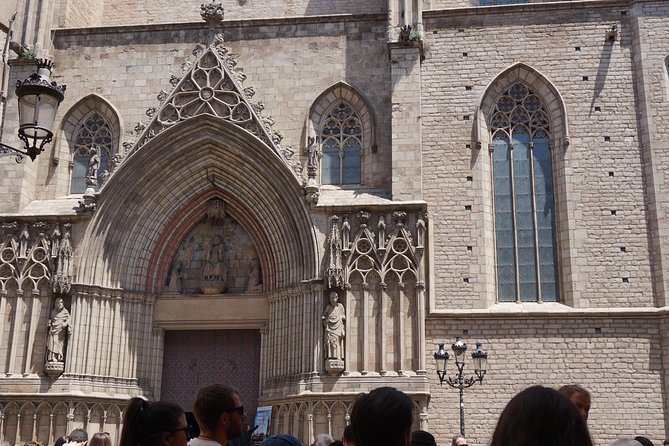
The Sinagoga Major de Barcelona is where the route adds real cultural depth. This restored synagogue is described as one of Europe’s oldest, and it’s tied to the Jewish community that existed in Barcelona from roughly the 9th to the 14th centuries. Estimates put the community around 4,000 people, with neighborhoods formed around narrow street areas called calls (from the Hebrew word for community or congregation).
Your time here is about 5 minutes. That’s quick, but it’s enough to see the space and absorb the context if the guide keeps the focus tight.
If you want a long, slow visit, you may find this stop a bit short. But as part of a one-day mix, it gives you perspective that a “just Gaudí” day won’t.
La Rambla: The Walk That Shows How the City Moves
After the quieter history corners, you step onto La Rambla, about 1.2 kilometers long. Most visitors walk it, but you’ll get more out of it with context.
La Rambla was laid out in 1766, following the contours of medieval city walls from the 13th century. The locals treated it as one of the only true leisure spaces where people could stroll—across social classes, all mixing in the same stretch.
Your time is about 15 minutes. It’s not about standing still; it’s about using the walk to get your bearings and feel the city’s tempo.
Quick reality check: La Rambla is popular. If you’re hoping to avoid crowds completely, this portion may not be your favorite. Still, it’s a useful bridge between stops—especially when you then head to the market.
Mercat de la Boqueria: Food Culture in Motion
Right on Rambla is Mercat de la Boqueria, and this is where the day turns into a “watch and snack” moment. The market evolved from a past of peddlers into a modern place known for color and life.
Your guided time is about 30 minutes, and that’s enough to do two things well: look closely at what’s sold and decide what you want to taste as part of the day’s food plan.
One thing I love about market stops is how they break up the architecture rhythm. Instead of monuments back to back, you get a human river of activity. If you’re the type who likes photos, you’ll also have more chances for close-up details than you’ll get at the squares.
Casa Batlló: Gaudí’s Bones and the Art of No Straight Lines
Then comes the Modernisme magic: Casa Batlló on Passeig de Gràcia in the Eixample district. This is widely treated as one of Gaudí’s masterpieces, and it began as a remodel of a previously built house. Gaudí’s big redesign came in 1904, and the building has been refurbished since.
The local nickname is Casa dels ossos—House of Bones—because of the skeletal, organic look. If you like symbolism, the façade delivers plenty, including the famous use of mosaic-like trencadís (broken ceramic tile) and the lack of straight lines.
Your time is about 10 minutes, and admission isn’t included. So you’re getting the highlight view, not a full-length interior tour unless you’ve planned for the ticket separately.
I think this is a great stop in a one-day tour because it teaches you something important: Gaudí isn’t just making buildings look pretty. He’s building a visual language—shapes that feel alive and strange in the best way. Even in a short visit, you’ll feel that.
La Pedrera (Casa Milà): When Stone Looks Like It’s Breathing
Next is La Pedrera, also called Casa Milà. It’s the last private residence designed by Gaudí, built between 1906 and 1912. The commission came from Pere Milà and his wife Roser Segimon, and the design was controversial at the time because of its undulating stone façade and twisting wrought-iron balconies.
What makes it especially interesting for a one-day schedule is how much of the “engineering brain” is visible in the design. There’s mention of structural innovations such as a self-supporting stone façade and a free-plan floor. You’ll also hear about features like the underground garage and the roof terrace.
This stop is about 15 minutes, and admission isn’t included.
Also worth knowing: La Pedrera became a UNESCO World Heritage Site in 1984, and since 2013 it has been the headquarters of the Fundació Catalunya La Pedrera, managing visits, exhibitions, and educational activities.
If you love Gaudí, this will feel like the perfect companion to Casa Batlló—same spirit, different mood. If you’re more “I want the main show only,” you might feel these two stops overlap. Still, they’re different enough that it works.
Tapas and Breaks: Food as Part of the Itinerary, Not an Afterthought
A good one-day tour needs real breaks. This one builds them in, and the day includes tastings that go beyond just walking past restaurants.
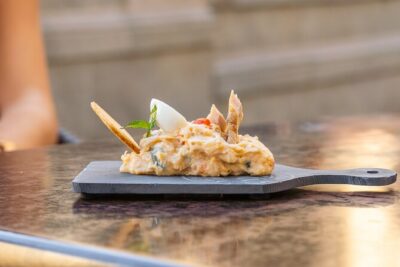
On the food side, the day has been described as including traditional nougat at Planelles Donat and finishing with traditional tapas at Orio, a chain known for pintxos along with wine and beer. In at least one version of this experience, the tapas stop included a glass of wine.
Even if you’re not a big “food tour” person, this matters. It keeps your energy steady so you can enjoy the architecture without getting wiped out mid-afternoon.
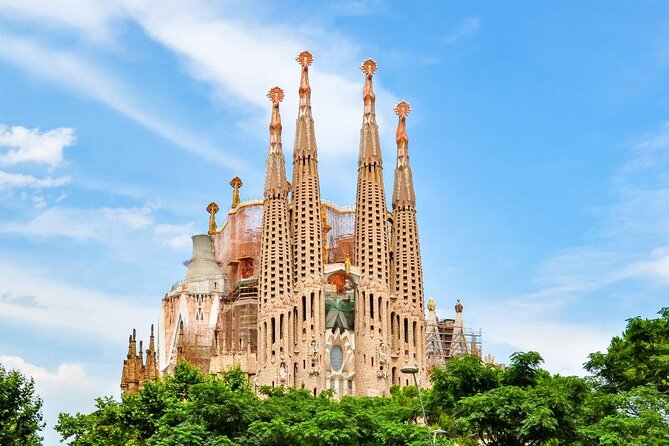
Sagrada Família at 4 pm: A Calm Ending You’ll Remember
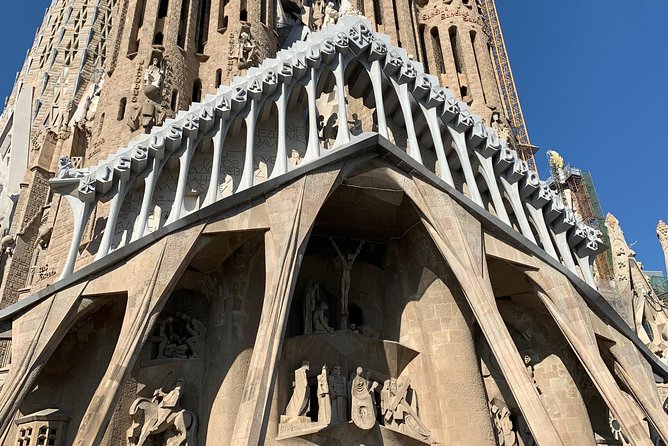
The finale is Basilica de la Sagrada Família, and the timing is the whole point. Your visit is scheduled starting around 4:00 pm, when the flow of visitors tends to drop. That means you can see more, breathe more, and actually look at details instead of racing through them.
You get about 1 hour inside, and admission is included. The focus is on visiting in depth without pushing you through a crowded script.
This is where the day changes. Up until now you’re in walk-and-look mode. At Sagrada Família, you shift into slow attention: how the space feels, how the details catch your eye, and how the building dominates the skyline in a way photos can’t quite explain.
If you’re deciding between tours, this is often the deciding factor: late-day Sagrada access paired with a structured route through the older parts of Barcelona.
Price and Value: What You Pay for in This Private Format
At $264.34 per person, this isn’t a cheap “hop on a bus” option. But it’s also not priced like a fancy multi-day private chauffeur setup.
Here’s what you’re really paying for:
- Private time for your group, not a crowded herd. That means fewer waiting games and more flexibility when something takes longer.
- A time-managed route designed to avoid peak crowd moments, especially the Sagrada Família slot.
- A mix of included and guided experiences, with the Sagrada Família admission included and the rest focused on key looks and context.
You should also account for the fact that some attraction admissions aren’t included (for example, Catedral de Barcelona interior, Casa Batlló, and La Pedrera are listed as not included). That doesn’t make the tour bad—it just means you should budget for a couple of ticket upgrades depending on what you want to see inside.
So the value depends on your priorities. If you want a one-day “greatest hits” walkthrough with food and a better Sagrada schedule, it can feel worth it. If you want deep interior time in multiple museums, you may feel the price for a shorter stop count.
Who This Tour Fits Best (and Who Might Feel Cramped)
This works best if:
- It’s your first trip to Barcelona and you want a smart overview
- You love Gaudí but also want the Gothic Quarter and Jewish Quarter included
- You want a route that ends at Sagrada Família when it’s calmer
- You appreciate food breaks built into the plan
It might feel less ideal if:
- You hate walking or need long sits in between stops
- You expect to spend a long time inside each major attraction
- You’re the type who wants to wander independently through La Rambla and markets without a set flow
Private tours are flexible, but they’re still time-boxed. Think of this as a guided “highlight sprint with flavor.”
Should You Book This Private One-Day Barcelona Tour?
I’d book it if you want a first-timer day that actually connects the dots: Roman Barcino roots, medieval Barcelona power centers, a restored synagogue, two Gaudí home masterpieces, and a calmer Sagrada Família finish. The best part is the rhythm—walk, look, learn, eat, then end with Gaudí where you can take your time.
Don’t book it if your ideal day is mostly slow streets with lots of free time, because this experience is built for coverage. If you do book, go in with a simple mindset: let the guide handle the flow, and you’ll get a high return on your limited hours in Barcelona.
FAQ
How long is the Barcelona in One Day tour?
It’s about 5 hours.
Is this tour private or shared with strangers?
It’s private. Only your group participates.
What language is the tour offered in?
The tour is offered in English.
Is admission included for all the stops?
No. Sagrada Família admission is included, while other sites in the route list admission as not included.
What’s included for the Sagrada Família visit?
You get a 1-hour visit to the Basilica de la Sagrada Família, and the admission ticket is included.
What time does the Sagrada Família portion start?
The plan focuses on the evening starting at 4 pm.
Where does the tour start?
The meeting point is Av. de la Catedral, 7, Ciutat Vella, 08002 Barcelona, Spain.
Does the tour run in any weather?
It requires good weather. If canceled due to poor weather, you’ll be offered another date or a full refund.
Can I cancel for a full refund?
Yes. You can cancel up to 24 hours in advance for a full refund. If you cancel less than 24 hours before, the amount paid is not refunded.